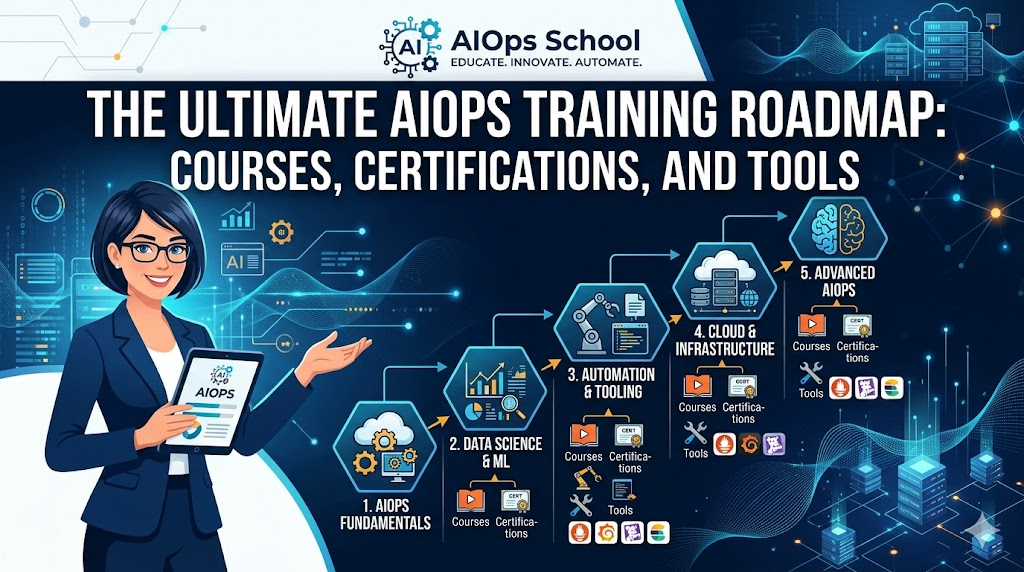
Modern enterprise software ecosystems have scaled past human management capability. Microservice-heavy applications, ephemeral Kubernetes clusters, serverless functions, and distributed cloud topologies produce vast quantities of telemetry. When an infrastructure failure happens, thousands of cascading alerts fire simultaneously across decoupled dashboards. This causes high stress, significant cognitive fatigue, and lengthy root-cause investigations.
Traditional IT monitoring systems struggle under this volume because they rely on rigid, manual thresholds. When an organization’s solution to infrastructure tracking is adding more static alerts, the result is an overwhelming influx of notifications. Critical signals are missed, and engineers spend hours sorting through metrics to fix a single problem.
+-----------------------------------------------------------------+
|                    Traditional IT Monitoring                    |
|  [Static Thresholds] -> [Alert Fatigue] -> [Manual Triage]      |
+-----------------------------------------------------------------+
                                VS
+-----------------------------------------------------------------+
|                 AI-Driven IT Operations (AIOps)                 |
|  [Multi-Source Telemetry] -> [ML Engines] -> [Auto-Remediation] |
+-----------------------------------------------------------------+
This operational gap has accelerated the adoption of Artificial Intelligence for IT Operations (AIOps). By pairing Big Data platforms with Machine Learning (ML), AIOps filters telemetry noise, isolates incident root causes, and automates real-time incident responses.
As a result, technical teams are transitioning away from reactive handling. Moving forward requires structured AIOps Training to master the machine learning architectures, observability pipelines, and automated response systems that drive modern production environments.
What is AIOps?
Coined by Gartner, AIOps stands for Artificial Intelligence for IT Operations. It refers to the practice of using big data, analytics, and machine learning to automate, improve, and scale IT operational workflows.
       [ Telemetry Ingestion ] (Metrics, Logs, Traces, Events)
                 │
                 ▼
       [   AIOps Engine    ] (Clustering, NLP, Pattern Matching)
                 │
                 ▼
  ┌──────────────┴──────────────┐
  ▼                             ▼
[Noise Reduction]      [Root Cause Analysis]
  │                             │
  └──────────────┬──────────────┘
                 ▼
       [ Auto-Remediation  ] (Automated Runbooks/Playbooks)
The Evolution of Operations
To understand why AIOps is necessary, consider how IT operations models have evolved over the last few decades:
- Siloed Systems Monitoring: Early workflows used separated tools for distinct components, checking isolated infrastructure metrics like CPU usage or disk capacity.
- Centralized APM & Dashboards: Application Performance Monitoring (APM) introduced end-to-end tracing, but still relied on manual alert rules.
- Observability Ecosystems: Teams collected extensive structured logs, distributed traces, and high-cardinality metrics, creating vast datasets that are difficult for humans to analyze manually.
- AIOps: Algorithmic systems ingest this telemetry, run unsupervised learning models to identify anomalies, group related alerts, and trigger automated scripts to resolve issues without manual intervention.
Big Data, Machine Learning, and Observability
AIOps does not replace observability frameworks; it integrates with them. Observability tools gather data across three core categories: metrics, logs, and traces. The AIOps platform acts as the central intelligence engine, using mathematical models to derive meaning from that combined data.
- Big Data Ingestion: Collects structured and unstructured information across multi-cloud environments, continuous delivery pipelines, and ticket management systems.
- Machine Learning: Applies specialized algorithms—such as Natural Language Processing (NLP) for log analysis or clustering models for alert grouping—to find hidden patterns and system variations.
Unlike legacy monitoring configurations that use fixed rules (e.g., alert if CPU exceeds 85%), AIOps tracks baseline performance dynamically. It accounts for normal fluctuations, such as predictable traffic jumps during business hours, reducing unnecessary alerts while catching complex issues early.
Why AIOps Matters in Modern IT Operations
Enterprise systems require continuous availability. When outages occur, they impact business revenue and damage customer trust. A structured AIOps Course covers the core methodologies needed to shift a company’s response workflow from reactive firefighting to predictive, automated management.
Operational Advantages
- Noise Reduction and Event Correlation: Instead of sending hundreds of isolated notifications during a network issue, an AIOps engine groups related events into a single managed incident record. This surfaces the core issue instead of a flood of secondary alerts.
- Predictive Analytics & Capacity Management: By evaluating historical resource usage, these tools flag capacity risks—such as impending database storage exhaustion—weeks before they disrupt services.
- Automated Root Cause Analysis (RCA): AIOps maps system topology to track dependencies across infrastructure layers. When a failure happens, it isolates the underlying cause, such as a faulty microservice deployment or an unindexed database query.
- Auto-Remediation: When an issue matches a known pattern, the system can launch automated playbooks—such as restarting a memory-leaking container or scaling a Kubernetes deployment—to resolve the problem without requiring an engineer on call.
Enterprise Incident Response Metrics:
┌──────────────────────────────┬──────────────────────────────┐
│ Traditional Monitoring       │ AI-Driven Operations         │
├──────────────────────────────┼──────────────────────────────┤
│ High Mean Time to Repair     │ Faster MTTR via Automated    │
│ via Manual Diagnostic Triage │ Isolation and Runbooks      │
└──────────────────────────────┴──────────────────────────────┘
Consider a real-world enterprise example: During a major database slowdown, a standard system sends alerts across computing nodes, storage arrays, network interfaces, and user-facing applications.
An AIOps platform handles this by correlating those notifications, matching them with a recent deployment marker, and identifying a specific code commit as the source of the issue. By isolating the cause immediately, it reduces the team’s Mean Time to Repair (MTTR) from hours to minutes.
Who Should Take an AIOps Training Program?
AIOps changes how teams manage infrastructure, making AIOps Training highly relevant for multiple technical and engineering roles:
- DevOps Engineers: Learn to embed automated analytics and feedback loops directly into continuous integration and deployment (CI/CD) pipelines to catch deployment anomalies early.
- Site Reliability Engineers (SREs): Master automated remediation and multi-window burn-rate tracking to protect service error budgets and maintain high availability.
- Platform & Cloud Engineers: Gain the skills to design resilient, self-healing platforms across hybrid and multi-cloud environments.
- Monitoring & NOC Specialists: Move away from manual dashboard checking and transition toward designing algorithmic data pipelines.
- IT Managers & Directors: Learn to evaluate enterprise AIOps tools, structure cross-functional operations teams, and measure return on investment (ROI).
- ML Engineers: Apply existing machine learning models to the specialized domain of infrastructure telemetry and high-throughput operational data.
What Will You Learn in an AIOps Course?
A professional curriculum maps directly to real-world engineering environments. An advanced AIOps Course guides technical professionals systematically from core architectural theory through to production deployments.
Curriculum Structure
Module 1: AIOps Fundamentals
Understand the core principles of algorithmic operations, the Gartner lifecycle framework, data ingestion patterns, and the five pillars of automated operations: ingestion, analysis, correlation, remediation, and prediction.
Module 2: Observability Architecture
Learn to design modern telemetry fabrics that capture open, high-cardinality data across distributed systems, multi-cloud platforms, and containerized microservices.
Module 3: Metrics Engineering
Master high-throughput time-series data management, dynamic thresholding, sliding-window statistical calculation, and multi-window alert logic.
Module 4: Advanced Log Analytics
Ingest large volumes of log data, structure unstructured logs, and use Natural Language Processing (NLP) to classify errors and detect unseen anomalies.
Module 5: Distributed Tracing
Map end-to-end request flows across distributed services, isolate latency sources, and trace contextual dependencies across complex microservice boundaries.
Module 6: Event Correlation and De-duplication
Apply topological mapping, time-window grouping, and heuristic engines to combine thousands of individual events into single, actionable incidents.
Module 7: Algorithmic Anomaly Detection
Implement unsupervised learning models, including isolation forests, clustering techniques, and seasonal auto-regressive algorithms, to identify system issues early.
Module 8: Machine Learning for Systems Operations
Train, validate, and manage operational machine learning models. Learn to handle drift adjustments and balance performance with feature-engineering techniques.
Module 9: Incident Triage & Contextual Intelligence
Integrate incident metrics with operational context, automated documentation systems, historical runbooks, and enterprise collaboration platforms.
Module 10: Auto-remediation & Self-Healing Pipelines
Design closed-loop automation paths using event-driven tools to execute declarative playbooks and resolve issues securely without manual intervention.
Module 11: OpenTelemetry Standards
Implement vendor-neutral telemetry collections across microservices using the OpenTelemetry API, SDK components, and collector architectures.
Module 12: Enterprise AIOps Architecture & Governance
Architect scalable, secure, and compliant multi-tenant AIOps systems. Learn to evaluate platforms, manage data retention costs, and maintain security compliance.
Top AIOps Tools You Should Know
Modern enterprise environments utilize a mix of open-source components, specialized correlation engines, and full-stack observability suites. Evaluating these options requires analyzing their data collection capabilities, internal ML architectures, and ease of deployment.
| Tool | AI & Machine Learning Capabilities | Event Correlation Strengths | Automation & Remediation | Integration Ecosystem | Pricing Model | Adoption Curve |
| Splunk | Strong predictive analytics via Machine Learning Toolkit (MLTK). | High correlation capacity via IT Service Intelligence (ITSI). | Uses automated playbooks through Splunk SOAR. | Wide ecosystem of enterprise plugins. | Volume-based ingestion pricing. | Moderate to Steep |
| Dynatrace | Davis AI engine uses deterministic, causal AI. | Precise, topology-based root cause identification. | Integrates with event-driven automation tools. | Strong cloud-native integrations. | Host and consumption-based. | Low to Moderate |
| Datadog | Watchdog AI surfaces anomalies and tracks outlier logs. | Good correlation across infrastructure and metrics. | Workflow Automation triggers cloud runbooks. | Extensive API cloud integrations. | Tiered per-node consumption pricing. | Low (SaaS-friendly) |
| Prometheus | Basic statistical thresholds; needs external ML engines. | Relies on manual Alertmanager routing. | Relies on external webhooks for automation. | Standard for Kubernetes environments. | Open Source (Self-hosted infrastructure). | Moderate |
| Grafana | Grafana Cloud provides built-in ML panel tools. | Correlates via unified dashboard overlays. | Connects to standard alerting webhooks. | Works with almost all backend data sources. | Freemium / Consumption model. | Low to Moderate |
| Elastic Stack | Unsupervised ML for time-series anomalies and log categorization. | Good correlation via log analytics and SIEM features. | Triggers actions through built-in watch vectors. | Native data beat collectors. | Resource-based usage pricing. | Moderate |
| Moogsoft | Advanced unsupervised clustering algorithms. | Strong noise reduction and alert de-duplication. | Forwards rich incident data to orchestration platforms. | Connects easily with legacy enterprise setups. | Subscription based on event volume. | Moderate |
| BigPanda | Open Box AI uses clear, explainable correlation logic. | Excellent multi-source cross-tool correlation. | Triggers external self-healing systems. | Deep integrations with ITSM tools like ServiceNow. | Annual subscription based on volume. | Moderate |
| New Relic | Grok AI assistant provides interactive analysis. | Good correlation across full-stack monitoring layers. | Connects with external orchestration tools. | Broad APM language support. | Users + Ingested data footprint. | Low to Moderate |
Benefits of Earning an AIOps Certification
As enterprises deploy complex multi-cloud systems, the demand for verified technical skills is rising quickly. Completing an assessment-backed AIOps Certification provides several clear career advantages:
- Increased Market Demand: Organizations are actively searching for operations engineers who can manage high-volume data systems without relying on manual processes.
- Career Advancement: Moving from a traditional infrastructure role to an AI-driven operations engineer positions you for senior architecture and engineering opportunities.
- Higher Salary Potential: Engineers who specialize in applying machine learning to operations telemetry typically earn a 30%+ premium over traditional sysadmins or entry-level monitoring roles.
- Validated Technical Capability: Certification confirms that you have hands-on experience building anomaly detection models, structuring data ingestion pipelines, and designing self-healing production workflows.
- Future-Proof Skills: As standard systems administration tasks become more automated, mastering algorithmic infrastructure management keeps your skill set aligned with industry trends.
Why Choose AIOps School for AIOps Training?
AIOps School provides an expert-led, hands-on learning environment designed specifically for engineering professionals. The curriculum avoids dry, purely theoretical slides in favor of practical engineering scenarios.
- Hands-On Lab Environments: You will build, run, and test anomaly detection systems, configure production monitoring setups, and deploy auto-remediation playbooks on real live cloud infrastructure.
- Structured Learning Tracks: Choose the clear learning path that matches your current experience and goals, spanning Foundation, Engineer, Professional, and Architect levels.
- Project-Based Portfolio Work: Complete real-world capstone projects, such as instrumenting microservices with OpenTelemetry or building automated self-healing loops, to build a public GitHub portfolio.
- Expert-Led Instruction: Learn directly from veteran industry professionals who have spent decades designing and deploying large-scale observability and operations platforms for Fortune 500 enterprises.
- Global Peer Community: Connect with software and operations professionals across more than 50 countries to collaborate on projects, share design ideas, and expand your professional network.
- Enterprise Consulting Support: Benefit from comprehensive program offerings that include implementation guidance, continuous learning management system (LMS) access, and a specialized freelance marketplace.
Career Opportunities After Completing an AIOps Certification
Earning an AIOps Certification qualifies technical professionals for specialized, senior roles within engineering organizations:
Job Roles & Core Responsibilities
AIOps Engineer
Build and maintain scalable data pipelines for metrics, traces, and logs. Configure machine learning models for anomaly detection and event correlation, and integrate observability data with enterprise ticketing systems.
Site Reliability Engineer (SRE)
Protect service error budgets by automating incident response workflows. Design multi-window alerting strategies and implement event-driven self-healing playbooks to minimize MTTR.
Observability Architect
Design vendor-neutral telemetry collection frameworks using OpenTelemetry. Establish performance standards across complex microservice applications and multi-cloud architectures.
Cloud Reliability Engineer
Maintain high availability for hybrid and public cloud infrastructure. Use predictive analytics to manage resource capacity and identify performance degradations before they impact users.
Incident Intelligence Specialist
Optimize enterprise alert management pipelines to reduce noise. Build topological event-correlation models and design automated triage workflows for complex engineering environments.
Frequently Asked Questions (FAQ)
What is AIOps Training?
It is an educational path focused on teaching technical professionals how to integrate big data, cloud observability frameworks, and machine learning models to automate and optimize software operations workflows.
Is AIOps difficult to learn for traditional operations engineers?
The learning curve is manageable if you follow a structured roadmap. It requires moving from fixed, rule-based thinking to algorithmic, data-driven approaches, alongside learning basic Python and data science concepts.
Which AIOps tools are most widely used in enterprise environments?
Enterprises frequently use full-stack observability suites like Dynatrace, Datadog, Splunk, and New Relic, alongside specialized event-correlation engines like BigPanda and open-source stacks such as Prometheus, Grafana, and Elastic Search.
Is an AIOps Certification worth the investment?
Yes. Validating your ability to manage high-volume telemetry and deploy automated remediation strategies distinguishes you from traditional operations paths and unlocks higher-compensated senior engineering roles.
How long does it take to complete a comprehensive AIOps Course?
Foundational tracks usually require around 30 days with a commit time of 10 to 12 hours per week. Advanced engineering and architect tracks typically take 45 days or more of dedicated study and practical lab work.
Can DevOps Engineers easily transition into an AIOps career?
DevOps engineers are well-positioned for this transition because they already understand continuous delivery pipelines, infrastructure-as-code, and basic cloud architecture. AIOps extends these skills with machine learning analytics and automated remediation loops.
What are the prerequisites for joining an advanced training track?
Candidates should understand basic Linux administration, cloud infrastructure concepts (such as AWS, Azure, or GCP), and container tools like Kubernetes. Basic scripting familiarity with Python is also helpful.
Are hands-on labs important when learning AIOps?
Hands-on labs are essential. You cannot master algorithmic operations purely through reading. You must practice configuring high-throughput data pipelines, training anomaly detection models, and testing live remediation playbooks.
What major industries are adopting AIOps platforms most rapidly?
Highly distributed, consumer-facing sectors lead adoption. This includes financial services, e-commerce, global logistics, healthcare networks, and large SaaS providers where system downtime directly impacts business revenue.
What does the future of AIOps look like over the next few years?
The industry is moving toward causal AI models that analyze system topology directly, alongside integrating Generative AI assistants to accelerate incident triage, document root causes, and write automated remediation playbooks.
Conclusion
Modern cloud infrastructure has grown too complex for manual oversight. Relying on traditional monitoring models leads to alert fatigue, missed system signals, and extended diagnostic sessions that impact business availability.
Transitioning to automated operations requires moving toward data-driven architectures. By combining big data networks with machine learning, organizations can filter out system noise, identify root causes automatically, and deploy secure, self-healing code.
For engineering professionals, staying ahead means mastering these automated workflows. Enrolling in a comprehensive AIOps Course and earning an industry-recognized AIOps Certification via AIOps School provides the practical skills, lab experience, and portfolio assets needed to lead modern enterprise infrastructure teams.
