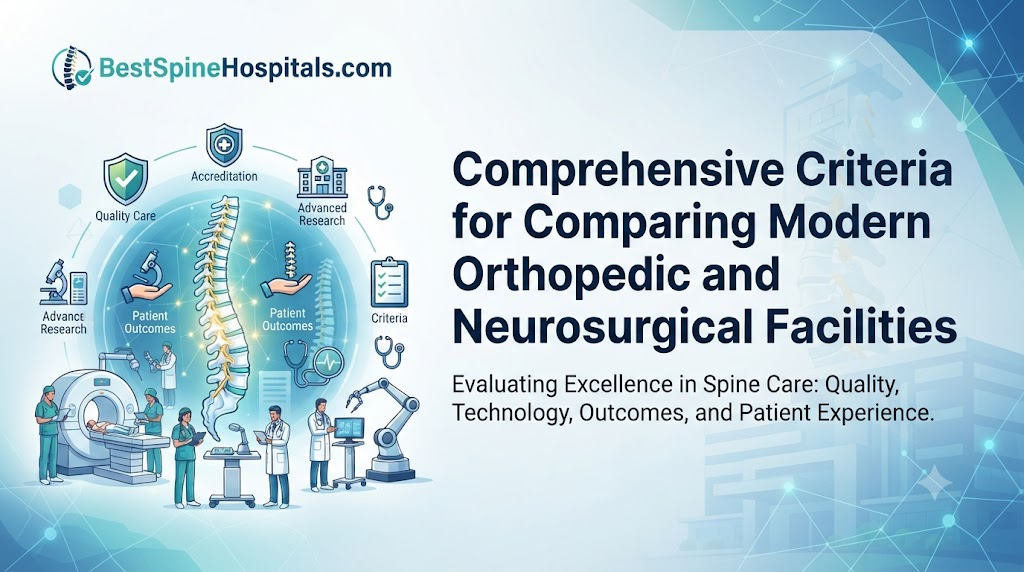
Coping with persistent back or neck discomfort can take a heavy toll on your day-to-day life, turning routine physical movements into frustrating barriers. Because our spinal architecture supports virtually every movement we make, disorders affecting it impact each person differently. Two individuals reporting identical symptoms may require completely different treatment trajectories, ranging from targeted physical conditioning to advanced surgical solutions. This individuality is why conducting careful, well-rounded research is essential before making any major healthcare decisions.
What Characterizes Exceptional Spine Care Centers?
Assessing medical facilities requires looking past superficial marketing to identify the true indicators of high-quality treatment. Standout healthcare centers bring together collaborative teams of qualified spine specialists, including both orthopedic surgeons and neurosurgeons.
Beyond expert physicians, premier institutions feature advanced imaging suites, modern operating theaters, and comprehensive non-surgical care programs. A truly robust clinical environment also integrates dedicated physical therapy, specialized pain management clinicians, experienced anesthesia support, and structured recovery wards to guide patients smoothly from initial evaluation all the way through rehabilitation.
Evaluating Hospitals When Surgery Is Recommended
When conservative treatments have been fully explored and an operation is identified as the appropriate next step, comparing surgical centers demands a close look at institutional capabilities. Patients should examine the clinical track record of the surgical staff, hospital infrastructure, and advanced imaging technology.
Equally critical are rigorous infection-control protocols, intensive care support, and clear postoperative monitoring procedures. Transparent communication regarding treatment planning ensures that individuals and their families stay fully informed throughout the entire experience.
Key Considerations in Selecting a Surgical Hospital
Deciding where to undergo a spinal procedure involves weighing several practical and clinical factors. A primary consideration is the institution’s documented history of handling your specific type of spinal condition.
Access to cutting-edge surgical tools, thorough preoperative evaluations, structured recovery support, and transparent cost considerations all play an essential part in reducing anxiety and ensuring a smooth hospital stay.
The Practical Value of Geographic Proximity
While clinical expertise remains the absolute priority, the physical location of a medical facility can heavily influence your overall recovery experience. Managing travel logistics for initial evaluations, routine check-ups, and frequent outpatient physical therapy sessions is significantly easier when distances are manageable.
Having family close by for daily encouragement and ensuring quick access to urgent care when appropriate make regionally accessible facilities well worth considering.
What to Look for in Qualified Spine Surgeons
The physician guiding your care plan is arguably the single most influential factor in your treatment journey. When evaluating surgeons, review their board certifications, specialized sub-training, and clinical experience with similar spinal diagnoses.
The most reliable practitioners prioritize accurate diagnostics, take the time to explain anatomical concepts in plain language, and genuinely explore conservative remedies before recommending surgery. Their hospital affiliations and dedication to long-term follow-up planning further reflect their commitment to patient safety.
The Function of Specialized Surgical Environments
Dedicated surgical facilities are engineered specifically to handle the complex demands of spinal operations. Beyond the primary operating room, these centers provide specialized nursing personnel, real-time neuromonitoring tools to safeguard nerve pathways, and rigorous sterile protocols.
This focused infrastructure ensures that delicate procedures are executed with precision and immediate institutional safety backing.
Understanding Minimally Invasive Spinal Techniques
Minimally invasive approaches represent a major evolution in modern spinal healthcare. Rather than relying solely on traditional open incisions, specialists may utilize specialized tubular retractors and high-definition optical gear to reach the affected area through smaller pathways, minimizing trauma to adjacent muscles.
While these methods can support faster initial recovery in suitable candidates, minimally invasive surgery is not universally appropriate for every pathology. Suitability depends entirely on individual anatomy, diagnosis, and professional evaluation.
Managing Spinal Curvature and Scoliosis
Scoliosis involves an abnormal sideways curve of the spine that can emerge during childhood or progress into later adulthood. Treatment protocols vary widely depending on the patient’s age, the degree of curvature, and overall health status.
Initial management frequently centers on active observation and targeted physical therapy, whereas more pronounced curves may require specialized orthopedic intervention. Choosing a center with extensive experience in spinal deformity management is vital for maintaining long-term posture and structural stability.
Approaches to Herniated and Slipped Discs
A slipped or herniated disc occurs when the soft inner cushion of a spinal disc pushes through its outer wall, occasionally irritating adjacent nerve roots and causing sharp local back pain or radiating sensations down the limbs.
Fortunately, the vast majority of these cases improve steadily with conservative care, including guided physical therapy, targeted anti-inflammatory medications, and strategic activity adjustments. If symptoms persist or indicate nerve compression, advanced evaluations help determine whether targeted procedures are warranted.
Embracing Comprehensive Non-Surgical Pathways
Surgical intervention is just one component of the broader spine care spectrum. Many back and neck conditions respond remarkably well to non-operative management strategies.
These conservative methods encompass physical rehabilitation, core stabilization routines, lifestyle adjustments, and professional pain management techniques. Regular medical monitoring ensures that treatment plans remain dynamic and effective.
Essential Questions to Ask Your Medical Team
Entering a healthcare consultation with a structured list of questions empowers patients to take an active role in their health journey. Consider discussing the following topics with your provider:
- Does this facility have extensive experience managing my specific spinal condition?
- Which clinical specialists will direct my ongoing care and rehabilitation?
- What diagnostic imaging or tests are needed to confirm the root cause of my discomfort?
- Are there non-surgical options we should exhaust before discussing an operation?
- What particular surgical method is being suggested, and what are its primary benefits?
- What kind of physical therapy support is available following the procedure?
- What does the follow-up timeline look like during the healing phase?
- What financial and insurance factors should I review before moving forward?
How to Prepare for Your Consultation
Assemble Your Medical Records
Bring all relevant documentation, including recent MRI disks, radiology readouts, physician notes, and medication lists, to give your specialist a complete history of your condition.
Articulate Your Symptoms Clearly
Be prepared to describe the exact location, intensity, and duration of your discomfort, noting any triggers or associated numbness and weakness.
Write Down Your Questions
Having your concerns noted on paper ensures you remember every important point regarding your diagnosis and treatment options during the conversation.
Share Your Complete Health Background
Disclose past surgeries, chronic illnesses, current medications, and known allergies so your physician can design a safe, personalized care strategy.
Clarify the Recommended Plan
Ask your doctor to walk you through expected recovery milestones, potential risks, and alternative choices to ensure total clarity.
Recognizing When Symptoms Require Urgent Care
While most spinal discomfort develops gradually, certain sudden warning signs demand immediate medical evaluation.
Seek prompt emergency assistance if you experience acute, severe neurological changes, progressive limb weakness, a sudden loss of bladder or bowel control, or intense pain following a severe accident or fall. Recognizing these red flags ensures rapid intervention when serious issues occur.
How BestSpineHospitals.com Supports Your Research
Finding reliable information regarding spinal health can feel daunting amidst a sea of conflicting online advice. BestSpineHospitals.com acts as an accessible educational hub designed to help individuals research spine hospitals, qualified surgeons, and various treatment options.
Whether you are looking into general spine health, minimally invasive techniques, scoliosis care, or disc treatments, the platform offers structured insights to guide your decisions. By presenting clear institutional standards, the resource helps patients approach their healthcare journey with clarity and confidence.
Common Pitfalls to Avoid During Your Search
Rushing the decision-making process can lead to unnecessary complications. Patients should avoid choosing a facility based solely on flashy advertisements or selecting a physician purely on general name recognition.
It is equally important not to overlook specialist credentials, assume surgery is the only path to relief, or neglect the importance of post-treatment rehabilitation. Taking the time to weigh all options helps ensure a safer, more successful outcome.
The Impact of Modern Technology in Spine Care
Advanced technology significantly enhances surgical precision when placed in the hands of experienced professionals. High-resolution imaging systems, computer-guided navigation platforms, and specialized micro-instruments allow surgeons to execute complex procedures with incredible accuracy.
While these technological developments improve institutional workflows, they always rely on expert human skill and clinical judgment to achieve meaningful results.
The Crucial Role of Post-Treatment Rehabilitation
Healing from a spinal condition or procedure extends far beyond discharge day. A structured rehabilitation program is often the foundation of long-term recovery.
Personalized physiotherapy, targeted strengthening routines, and proper posture education help patients regain functional stability and protect their back moving forward. Because every healing journey is unique, rehabilitation regimens should always be tailored to the individual.
Looking Ahead at the Future of Spinal Care
Continuous medical research is actively refining how we diagnose and treat spinal disorders. Future developments point toward sharper diagnostic imaging, even more precise navigation tools, and refined minimally invasive techniques.
Expanded access to digital rehabilitation and collaborative multidisciplinary networks promises to make high-quality spine care more effective and reachable than ever before.
Conclusion
Choosing the right spine care facility and medical team requires thoughtful research, careful comparison of institutional capabilities, and an appreciation for individual health needs. Because spine conditions vary widely and surgical solutions are never universal, seeking professional evaluations for accurate diagnoses remains essential.
Utilizing educational platforms like BestSpineHospitals.com can help patients and families navigate their options, compare specialist backgrounds, and take confident steps toward lasting spinal health.
