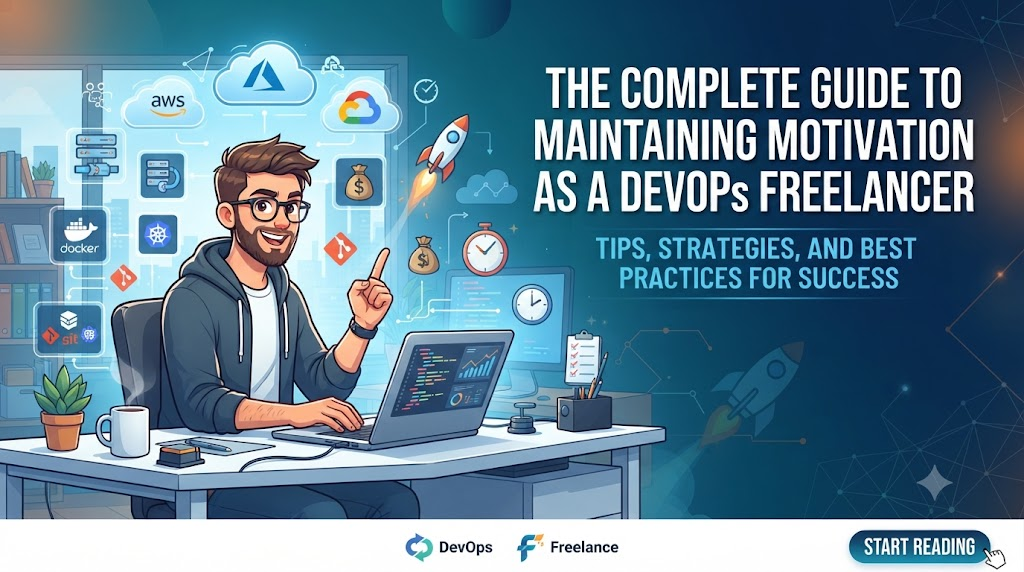
Introduction
Working as an independent DevOps freelance professional offers unmatched freedom. You choose your projects, set your schedule, and work with diverse clients across industries.
However, the independent path also comes with unique hurdles. Managing client expectations, handling erratic workflows, isolation, and keeping up with a fast-moving technical landscape can drain your energy.
When you are your own boss, manager, and tech support team, staying motivated isn’t just about productivity hacks—it is the core engine that sustains your entire DevOps freelance career.
Why Motivation Matters for DevOps Freelancers
As a freelance DevOps engineer, your drive directly dictates your output, income, and mental well-being. Motivation influences:
- Productivity & Delivery: Keeping focused keeps code deployments smooth and infrastructure secure.
- Continuous Learning: DevOps evolves rapidly; you must stay curious to remain competitive.
- Client Relationships: High energy translates to clear communication and better problem-solving.
- Career Longevity: Sustainable habits prevent burnout and long-term fatigue.
Common Motivation Challenges Faced by DevOps Freelancers
Before fixing a problem, you must name it. Independent DevOps consultants frequently struggle with:
- Irregular project workloads and cash flow anxiety.
- Working completely alone without peer interaction.
- Tight client deadlines and shifting requirements.
- Monotonous, repetitive maintenance tasks.
- The pressure of endless technological updates.
- Maintaining a healthy work-life balance from a home office.
Set Clear Career and Freelancing Goals
Wandering aimlessly leads to stagnation. Define clear milestones for your DevOps freelance career:
- Income Goals: Set monthly and quarterly financial targets.
- Technical Targets: Aim for specific cloud certifications or deep dives into Kubernetes or Platform Engineering.
- Client Goals: Define your ideal client profile and project scope.
Create a Structured Daily Work Routine
Without a commute or a boss checking in, days can blur together. Build a predictable daily schedule:
- Dedicate specific blocks for deep technical work, client communication, and administrative tasks.
- Enforce hard stop times to separate work from personal life.
- Schedule mandatory physical breaks to prevent eye strain and fatigue.
Break Large DevOps Projects Into Smaller Milestones
Architecting a brand-new cloud-native infrastructure or setting up a complex GitOps pipeline from scratch can feel overwhelming. Break massive deliverables into small, manageable chunks:
- Instead of “Build entire CI/CD pipeline,” break it down: configure repository webhooks, test artifact packaging, integrate security scanning, and deploy to staging.
- Checking off these smaller milestones releases dopamine and keeps momentum high.
Keep Learning Without Feeling Overwhelmed
The trap of DevOps professional development is trying to learn every single tool released on GitHub.
- Focus heavily on core principles rather than trendy wrapper tools.
- Align what you study directly with active market demands and client needs.
Build a Personal DevOps Learning Roadmap
Organize your technical growth across vital areas without spreading yourself too thin:
- Foundations: Linux, Networking, and Git.
- Core DevOps: CI/CD, Docker, Kubernetes, and Cloud platforms (AWS, Azure, GCP).
- Advanced Focus: Infrastructure as Code (Terraform/OpenTofu), Monitoring/Observability, DevSecOps, and SRE.
Work on Real-World DevOps Projects
Theory alone won’t keep you engaged. Build practical lab environments in your free time:
- Deploy a microservices application using Helm charts onto a local Minikube cluster.
- Write reusable Terraform modules to provision multi-region VPC architectures.
- Implement a robust Prometheus and Grafana monitoring stack with alert manager integration.
Build a Professional Portfolio
Documenting your achievements changes how you view your work. Create case studies of complex infrastructure migrations, automation scripts, and cost-optimization strategies you’ve executed. A strong portfolio boosts your self-confidence and attracts premium clients seeking specialized DevOps skills.
Avoid Comparing Your Freelance Journey With Others
Social media is full of exaggerated income claims and overnight success stories. Comparing your messy middle with someone else’s highlight reel destroys motivation. Focus entirely on your own personal progress and quarterly metrics.
Create a Healthy Work-Life Balance
Blurring the lines between home and work guarantees burnout. Protect your personal space:
- Step away from your terminal at the end of the workday.
- Dedicate time to hobbies, exercise, and social interaction outside of tech circles.
Manage Difficult Clients and Project Pressure
Scope creep, unclear architecture guidelines, and demanding deadlines test your patience. Protect your peace of mind by establishing clear communication protocols, documenting agreements in writing, and setting firm boundaries early in every contract.
Use Automation to Reduce Repetitive Work
Do not let yourself become bogged down by manual provisioning tasks. Automate everything:
- Write custom shell or Python scripts for routine checks.
- Use configuration management and CI/CD templates to spin up environments instantly. Making your workflow efficient makes engineering fun again.
Stay Connected With the DevOps Community
Freelancing can be isolating. Fight loneliness by engaging with industry peers:
- Participate in technical forums, subreddits, and Discord/Slack DevOps communities.
- Attend virtual meetups, webinars, and local tech conferences to share insights and stay inspired.
Find a Mentor or Build a Professional Network
Having a sounding board changes everything. Connect with senior engineers or fellow freelancers to exchange advice, review architecture designs, and uncover hidden freelance DevOps jobs through word-of-mouth referrals.
Track Your Progress and Celebrate Small Wins
Keep a “wins journal.” Jot down successful production deployments, positive client feedback, newly earned badges, or resolved outages. Looking back at these victories provides an immediate psychological boost during difficult weeks.
Maintain Motivation During Slow Freelancing Periods
Dry spells happen in every DevOps career. Instead of panicking, use downtime productively:
- Refine your personal website and LinkedIn profile.
- Contribute to open-source infrastructure tools.
- Write technical blog posts or record tutorials sharing your expertise.
Keep Your Freelance Business Organized
Chaos breeds stress. Use reliable project management tools, proper documentation templates, clear invoicing software, and structured time-tracking systems to keep your administrative load light.
Learn to Say No to the Wrong Projects
Taking on low-paying, high-stress projects just for quick cash kills your long-term drive. Evaluate potential gigs based on technical alignment, learning value, and fair compensation.
Prevent Burnout as a DevOps Freelancer
Watch for early signs of burnout: chronic fatigue, cynicism toward client requests, and declining code quality. Combat it by scheduling true time off, setting realistic delivery estimates, and stepping away from screens entirely over the weekends.
How DevOps Training Can Support Continuous Professional Growth
When you feel stuck in a rut or need to update your technical stack for new market demands, structured guidance helps immensely. Participating in comprehensive programs can give you a clear learning roadmap, hands-on labs, and real-world exposure. Platforms like DevOpsSchool offer targeted training that helps independent professionals sharpen their practical knowledge and stay aligned with modern enterprise requirements without wasting time on guesswork.
Build a Long-Term Freelance DevOps Career Strategy
Shift your mindset from project-to-project survival to building a sustainable business. Specialize in high-value niches, cultivate recurring client retainers, and continuously refine your technical repertoire to stay resilient against market shifts.
Future Opportunities for DevOps Freelancers
The technology landscape continues to expand. Lucrative opportunities thrive across several key domains:
- Cloud-Native & Kubernetes Orchestration
- DevSecOps & Shift-Left Security
- Platform Engineering & Internal Developer Portals
- Observability & AIOps-Driven Monitoring
Practical Daily Motivation Checklist for DevOps Freelancers
- Review daily priorities and time blocks.
- Complete one high-impact technical task.
- Check in clearly with active clients.
- Dedicate 30–45 minutes to focused learning.
- Document code changes and progress updates.
- Take regular offline breaks.
- Plan the next day before closing your laptop.
Frequently Asked Questions
How can I stay motivated as a DevOps freelancer?
Maintain a structured daily routine, break large infrastructure projects into smaller milestones, celebrate your small wins, and stay connected with a community of peers.
Why do freelance DevOps engineers lose motivation?
Inconsistent workloads, working in isolation, managing difficult clients, and the pressure of keeping up with endless technological shifts are the primary causes of fatigue.
How can DevOps freelancers avoid burnout?
Establish clear boundaries between work and personal life, learn to say no to misaligned projects, take regular offline breaks, and ensure you schedule real downtime between contracts.
How much time should a DevOps freelancer spend learning?
Dedicate 3 to 5 hours per week strictly to targeted learning, focusing on technologies that directly support your current career goals and market demand.
How can I stay productive between freelance projects?
Use quiet periods to build portfolio projects, update your professional profiles, contribute to open-source repositories, and study for advanced cloud or Kubernetes certifications.
Conclusion
Succeeding as a DevOps freelance professional takes far more than just technical aptitude. It requires discipline, emotional resilience, sustainable daily routines, and a commitment to continuous, focused growth. By safeguarding your mental energy, automating your workflow, and leaning into supportive professional networks, you can build a rewarding, fulfilling, and long-lasting independent career.
