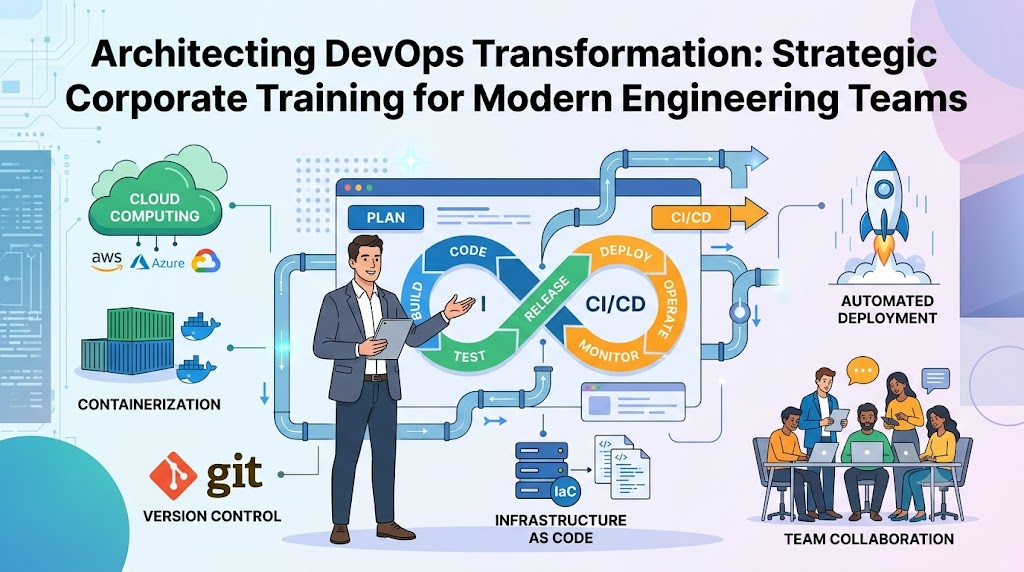
In the current technological landscape, the challenge is rarely a lack of tools, but rather the absence of a cohesive strategy to weave them into the fabric of organizational culture. Many enterprises today struggle with the “day two” problem—the reality where initial adoption of cloud-native technologies meets the friction of operational complexity. As an architect and advisor, I, Rajesh Kumar, have spent years navigating these hurdles, and I share these insights through my professional hub at Rajesh kumar to help organizations bridge the gap between technical potential and operational reality.
The evolution from traditional IT operations to high-performing engineering teams requires more than just installing software. It demands a fundamental shift in how teams perceive ownership, reliability, and security. Achieving this requires structured, hands-on guidance that goes beyond theoretical concepts.
Understanding Current Enterprise Challenges
Many organizations initiate their digital transformation journey with high aspirations, only to be stalled by systemic issues. Common obstacles include the prevalence of siloed workflows, where development and operations teams operate on conflicting incentives. Furthermore, the rapid adoption of cloud services without an underlying standardization often leads to “cloud sprawl” and escalating costs.
Scalability remains a critical concern. As traffic patterns fluctuate, teams frequently find that their manual deployment processes cannot keep up, resulting in bottlenecks and downtime. From a security standpoint, the “bolted-on” approach to defense is increasingly untenable. Organizations are realizing that security must be an inherent property of the software delivery lifecycle rather than a final gatekeeper. Addressing these challenges requires a shift toward automation, visibility, and a culture of continuous improvement.
Why Skilled DevOps Trainers Matter
Generic training programs often fail to deliver because they lack context. A slide-based overview of tools is rarely sufficient for engineers tasked with maintaining mission-critical production environments. An experienced DevOps trainer brings battlefield experience to the classroom. This perspective allows the training to focus on real-world edge cases—what to do when a cluster fails, how to manage stateful data in containers, and how to effectively troubleshoot ephemeral infrastructure.
When seeking a DevOps Trainer, look for individuals who have walked the path of implementation. Whether providing DevOps Corporate Training for a large engineering department or guiding a specialized unit, the goal should be to reduce the “mean time to proficiency.” High-quality training minimizes the risks associated with learning by doing on production systems, ensuring that teams adopt best practices from day one.
Essential Skills Every Modern DevOps Professional Needs
A modern engineering team is a tapestry of various competencies. While not every engineer needs to be an expert in every tool, core knowledge must be distributed across the team.
Infrastructure and Orchestration
Automation is the cornerstone of modern operations. Proficiency in tools that enable repeatable, version-controlled infrastructure is non-negotiable. This is where comprehensive Terraform Training becomes vital, as it allows teams to define complex cloud environments as code, reducing drift and configuration errors.
Delivery and Containers
Modern applications live in containers. Teams must move beyond basic usage to understand the intricacies of orchestration. Docker Kubernetes Training provides the necessary foundation for managing these workloads at scale, ensuring that applications are resilient and portable across different environments.
The CI/CD Pipeline
The pipeline is the heartbeat of the software development lifecycle. Quality CI/CD Pipeline Training focuses on creating fast, reliable feedback loops. This involves understanding how to integrate testing, security scanning, and automated deployment strategies—like blue-green or canary releases—to minimize risk.
Kubernetes Training for Enterprise Teams
Kubernetes is the industry standard for container orchestration, but its complexity is often underestimated. Enterprise teams frequently struggle with networking, storage persistence, and security policies within K8s clusters.
Practical learning approaches for Kubernetes must be rooted in operational reality. A Kubernetes Trainer should emphasize the “why” behind the “how.” For instance, rather than just showing how to write a deployment manifest, training should cover how to design for high availability, how to optimize resource requests and limits to ensure cost-efficiency, and how to effectively monitor cluster health. Production readiness is the ultimate metric for successful Kubernetes training.
Site Reliability Engineering (SRE) Training
As organizations grow, the need for a dedicated focus on reliability becomes apparent. SRE bridges the gap between software development and systems operations. SRE Training focuses on quantitative reliability rather than subjective stability.
Key components include defining Service Level Objectives (SLOs) and Service Level Indicators (SLIs) that align with business goals. It involves learning how to manage “toil”—the manual, repetitive work that consumes engineering time—and implementing blameless post-mortems to foster a culture of learning from failure. Observability, moving beyond simple monitoring, is the primary goal, ensuring that teams can understand the internal state of a system based on its external outputs.
DevSecOps in Modern Organizations
Security cannot be an afterthought. DevSecOps is the methodology of integrating security controls into every phase of the pipeline. A DevSecOps Trainer guides teams in implementing “shift-left” security, where testing, vulnerability scanning, and compliance checks occur during development rather than at the end.
This requires a change in mindset. Developers and operations engineers must be equipped with the knowledge to write secure code and manage secure configurations. By fostering security awareness through training, organizations can reduce the window of exposure and ensure that the delivery process remains both fast and compliant.
Platform Engineering and Developer Enablement
The current trend in high-performing organizations is the transition from simple DevOps to Platform Engineering. This involves building Internal Developer Platforms (IDPs) that offer self-service capabilities to development teams.
A Platform Engineering Consultant helps organizations design platforms that reduce cognitive load on developers. By abstracting the underlying infrastructure complexity, engineering teams can focus on shipping features rather than debugging deployment pipelines. The objective is to create an “inner loop” development experience that is seamless, secure, and highly productive.
How DevOps Consulting Accelerates Transformation
Training is a catalyst, but consulting provides the roadmap. An experienced DevOps Consultant conducts a thorough assessment of the current state, identifying bottlenecks in the delivery process, gaps in skill sets, and risks in the current architecture.
This often involves creating a bespoke transformation roadmap. Whether it is an AWS DevOps Consultant helping to migrate workloads to the cloud or a GitOps Training specialist enabling automated operational workflows, consulting ensures that initiatives are aligned with specific business objectives. This capability building ensures that the transformation is sustainable long after the engagement concludes.
Suggested Learning Paths for Different Roles
A one-size-fits-all curriculum is rarely effective. Learning paths should be tailored to the specific responsibilities of the role:
- Developers: Focus on CI/CD integration, containerization, and writing testable code.
- Operations Engineers: Focus on Infrastructure as Code, K8s administration, and observability.
- Architects: Focus on system design, security, scalability, and platform-level strategy.
- Security Professionals: Focus on policy-as-code, scanning automation, and risk mitigation.
- Engineering Managers: Focus on metrics, team structure, and fostering a culture of ownership.
Practical Recommendations for Organizations
To successfully implement these changes, organizations must plan carefully.
- Start with the Culture: Tools are easy to adopt; changing mindset is hard. Prioritize communication and shared ownership.
- Measure Outcomes: Define success metrics (e.g., DORA metrics: deployment frequency, lead time for changes, mean time to recovery, and change failure rate) before beginning the training.
- Invest in Hands-On Learning: Theory is helpful, but practice is essential. Ensure that training programs include significant lab time.
- Sustain Momentum: Learning should be continuous. Create internal communities of practice where engineers can share knowledge and solve problems together.
- Leverage Expertise: Do not hesitate to bring in an external DevOps Trainer in India or elsewhere to provide an objective view and accelerate the learning curve.
Frequently Asked Questions
1. How do we measure the ROI of DevOps corporate training? ROI is measured through improved DORA metrics. Reduced lead times, higher deployment frequency, and lower change failure rates indicate that teams are effectively applying their training to improve operational efficiency.
2. Is there a difference between DevOps training and SRE training? Yes. DevOps focuses on the culture of collaboration and the pipeline. SRE focuses on the specific practices of reliability, observability, and managing systems at scale. Both are essential in a mature enterprise.
3. Should we train our entire team at once or in phases? Phased training is generally more effective. Start with a pilot team to demonstrate success, capture feedback, and refine the approach before rolling it out to the wider organization.
4. How does Jenkins training remain relevant in the era of GitHub Actions and GitLab CI? Many enterprises rely on legacy Jenkins pipelines. Understanding Jenkins remains vital for migration projects, modernization, and maintaining complex integrations that newer tools might not yet handle.
5. What is the most common mistake organizations make when starting with Kubernetes? Attempting to run production workloads without understanding the underlying networking and security models. Training should always cover the operational fundamentals before advanced orchestration features.
6. How do we prevent ‘training burnout’? Integrate training into the daily workflow. Instead of multi-day seminars, adopt a continuous, incremental learning approach where new skills are applied to active projects immediately.
7. Is a DevOps consultant necessary, or can we do this internally? Internal teams are often too close to the problems to see the broader solutions. A consultant brings an objective perspective and experience from multiple industries, which significantly accelerates the transformation process.
8. What is the role of GitOps in an enterprise environment? GitOps, using Git as the single source of truth for infrastructure and application state, provides auditability and reproducibility. Training in GitOps is crucial for teams looking to move toward fully automated, self-healing environments.
9. How do we keep up with the pace of DevOps tool evolution? Focus on mastering the underlying principles (idempotency, observability, automation) rather than just individual tools. Tools change; the architectural principles that drive DevOps remain constant.
10. Can you customize training for hybrid cloud environments? Yes. Any professional training program should be adaptable to the organization’s specific architecture, whether it involves AWS, Azure, GCP, or a hybrid/on-premises setup.
Conclusion
The path to building a high-performing engineering organization is not a sprint, but a sustained effort focused on continuous learning and strategic implementation. Whether through intensive DevOps Corporate Training, specialized Kubernetes workshops, or comprehensive SRE and DevSecOps guidance, the goal is to empower engineers to take ownership of their systems. By fostering an environment where practical, hands-on skills are prioritized, organizations can overcome the complexities of the modern digital landscape. Investing in expert guidance and committing to a culture of engineering excellence is the most reliable way to turn technical capability into lasting business value.
