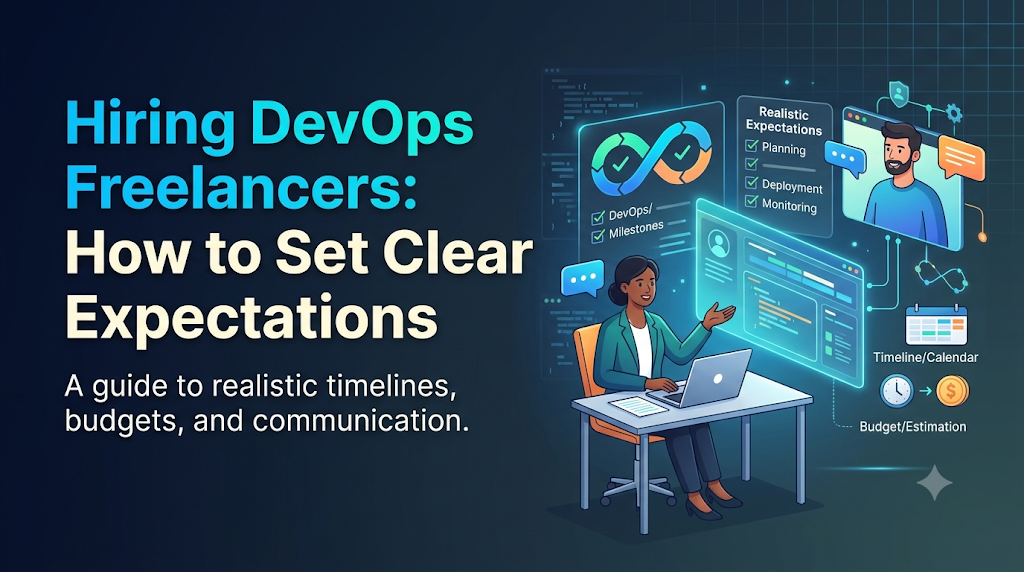
A growing SaaS startup recently hired an independent engineer to overhaul its deployment process. The founders envisioned a complete infrastructure modernization: automated container builds, zero-downtime rolling updates, centralized logging, strict security hardening, and an automated cloud migration. They hoped to see everything finished within three weeks. By the end of the second week, the project stalled. The engineer had spent days untangling hardcoded credentials in application source code, waiting for administrative access to cloud accounts, and attempting to decipher undocumented database dependencies. The founders felt disappointed by the pace; the engineer felt frustrated by hidden bottlenecks.
This scenario plays out across many businesses every week. The breakdown rarely stems from a lack of technical talent or poor work ethic. Instead, it traces back to misaligned expectations. DevOps spans software engineering, systems operations, security policies, and organizational workflows. When companies seek DevOps freelance services without establishing a shared technical reality, projects quickly encounter friction. Industry learning platforms such as DevOpsSchool provide structured training in core DevOps practices, automation frameworks, cloud architectures, and career skills, helping teams build a common operational vocabulary. However, when hiring external talent for short-term or project-based work, the burden of defining realistic outcomes rests directly between the client and the independent contractor.
Navigating freelance DevOps engagements requires moving past the illusion of the single “hero” engineer who can fix every operational flaw overnight. Success comes from defining outcomes, establishing clear responsibilities, respecting technical constraints, and holding both sides accountable to an agreed delivery scope.
Why Expectations Often Become a Problem in DevOps Projects
DevOps is not a single off-the-shelf product that can simply be installed. It represents an interconnected system of tools, automation scripts, operational practices, and code hygiene. Misalignment usually begins when business leadership views an infrastructure overhaul as a quick transactional task rather than an integrated engineering project.
Business Goals vs. Technical Requirements
A business goal captures an organizational outcome:
- “We need our engineering teams to ship updates faster.”
- “Our cloud hosting bill needs to decrease.”
- “We need high availability so customer transactions never fail.”
A technical requirement, by contrast, defines the exact mechanics, technical dependencies, and constraints needed to reach that outcome. For example, decreasing cloud hosting costs might require redesigning container auto-scaling policies, right-sizing persistent storage volumes, re-architecting database read replicas, or purging unindexed logging clusters.
When businesses provide freelancers with broad commercial wishes instead of defined technical requirements, the engineer must make assumptions. If those assumptions do not match the company’s internal roadmap, delivery stalls and friction mounts.
The Myth of the Omnipresent Engineer
Another persistent challenge in hiring DevOps freelancers is expecting one individual to master the entire modern technology ecosystem. A single freelance DevOps engineer may possess deep expertise in Kubernetes clustering and Terraform infrastructure automation, yet have limited familiarity with legacy enterprise message brokers or specific proprietary database tuning.
Treating an independent specialist as a universal troubleshooter for every network glitch, application crash, and build failure leads directly to burned budgets, rushed implementations, and unstable production environments.
What a DevOps Freelancer Can Actually Handle
Before setting expectations, teams must understand what falls within the realistic working domain of an external consultant. The responsibilities of an independent practitioner vary based on expertise, project scope, and system access:
+--------------------------------------------------------------------------+
|                  CORE DOMAINS OF A DEVOPS FREELANCER                     |
+------------------------------------+-------------------------------------+
| Infrastructure as Code (IaC)       | Continuous Integration & Delivery   |
| - Terraform modules                | - Pipeline build optimization       |
| - CloudFormation / Ansible playbooks| - Automated testing hooks           |
| - Reproducible environments        | - Staging & production deployment   |
+------------------------------------+-------------------------------------+
| Containerization & Orchestration   | Observability & Reliability         |
| - Dockerfile multi-stage builds    | - Metric collectors & dashboards    |
| - Kubernetes manifests / Helm charts| - Centralized log shipping          |
| - Service mesh & ingress routing   | - Critical threshold alerting rules |
+------------------------------------+-------------------------------------+
| Platform Security (DevSecOps)      | Operational Handover                |
| - Secrets management integration   | - Architecture reference diagrams   |
| - Vulnerability scanning triggers  | - Disaster recovery runbooks        |
| - Least-privilege IAM policies     | - Team walkthroughs & code reviews  |
+------------------------------------+-------------------------------------+
- Cloud Infrastructure Setup and Management: Provisioning virtual networks, computing instances, load balancers, and managed databases on cloud providers such as AWS, Google Cloud, or Azure.
- Infrastructure as Code (IaC): Replacing manual console clicks with maintainable codebases written in Terraform, OpenTofu, or Ansible.
- CI/CD Pipeline Development: Creating automated workflows in GitHub Actions, GitLab CI, or Jenkins that compile code, execute automated test suites, build container images, and publish artifacts.
- Containerization and Orchestration: Creating efficient Dockerfiles, maintaining Helm charts, and configuring Kubernetes clusters.
- Monitoring, Logging, and Observability: Configuring Prometheus, Grafana, Datadog, or cloud-native monitoring agents alongside structured log collectors like Vector, Fluent Bit, or OpenTelemetry.
- Deployment Automation: Implementing deployment patterns such as blue-green deployments, canary releases, and automated health checks to minimize production downtime.
- Basic DevSecOps Integration: Adding static code analysis, vulnerability scanners, and automated secrets management into build pipelines.
- Reliability and Performance Tuning: Analyzing compute bottlenecks, tuning auto-scaling groups, and optimizing caching layers.
- Technical Documentation: Drafting architecture decision records, environment setup scripts, and incident runbooks.
What Lies Outside the Scope
A freelance engineer cannot fix fundamentally broken internal application logic, resolve interpersonal conflicts between your software developers, or compensate for an organization’s lack of testing culture. Their work focuses on the delivery mechanism, runtime environment, and operational tooling—not re-architecting your core business product from scratch unless explicitly retained as a software architect.
Translating Business Goals into Technical Deliverables
To avoid misunderstandings, convert abstract goals into concrete, verifiable deliverables with explicit completion criteria.
+---------------------------+-----------------------------------+-------------------------------------+
| Business Objective       | Concrete Technical Deliverable    | Clear Acceptance Criteria           |
+---------------------------+-----------------------------------+-------------------------------------+
| Eliminate slow, manual    | GitHub Actions CI/CD pipeline for | - Pipeline triggers on main branch  |
| code deployments          | staging and production            | - Automated unit tests run          |
|                           |                                   | - Docker image pushes to registry   |
|                           |                                   | - Deploys to staging automatically  |
|                           |                                   | - Production requires 1 approval    |
+---------------------------+-----------------------------------+-------------------------------------+
| Modernize infrastructure  | Terraform configuration for       | - Network VPC and subnets deployed  |
| and reduce environment    | multi-tier cloud environments     | - Zero manual console edits needed  |
| discrepancies             |                                   | - State stored in remote backend    |
|                           |                                   | - Variables parameterize dev/prod   |
+---------------------------+-----------------------------------+-------------------------------------+
| Prevent undetected system | Observability dashboard and alert | - System metrics (CPU, RAM, Disk)   |
| outages and slowdowns     | routing setup via Prometheus      | - HTTP 5xx error rate alert active  |
|                           |                                   | - High latency notifications route  |
|                           |                                   |   directly to on-call Slack channel |
+---------------------------+-----------------------------------+-------------------------------------+
This translation transforms an open-ended request (“improve our deployments”) into an unambiguous contract of work. Both parties understand what needs to be built, how its functionality will be verified, and when the task is officially complete.
Scope Definition: What Is Included and What Is Not?
Scope creep is the single most common cause of failed freelance technical engagements. Without firm boundaries, a project that began as a simple pipeline audit gradually expands into database migrations, microservice refactoring, and emergency midnight troubleshooting.
A thorough scope document must define:
- Primary Project Objectives: The core problem the freelancer is hired to solve.
- Current System Assessment: The baseline state of the application, network, and hosting platform before modifications begin.
- Target Platforms and Tooling: The specific tools approved for the project (such as AWS, Terraform, Docker, or GitHub Actions).
- Environments Covered: Explicit designations of which tiers are included (e.g., Development and Staging only; Production handled in a subsequent phase).
- Required Deliverables: The source code repositories, automation scripts, configuration files, and documentation to be handed over.
- Required Access Points: The specific permissions, administrative portals, code repositories, and communication channels the contractor will need.
- Acceptance Criteria: The operational tests or verification steps that confirm the deliverable works as agreed.
- Documentation Standards: Clear expectations for README files, architecture diagrams, and inline configuration comments.
- Post-Project Support Window: The specific duration during which the freelancer will address bugs directly related to the delivered work.
- Explicit Exclusions: Technologies, legacy servers, application-level refactoring, or operational tasks that are intentionally excluded from the contract.
Practical Scope Example: Containerizing a Legacy Service
In Scope:
- Create production-ready, multi-stage Dockerfiles for two backend microservices (Node.js and Python API).
- Author local development orchestration manifests using Docker Compose to spin up local application containers and supporting PostgreSQL databases.
- Build a continuous integration workflow in GitLab CI that lints code, runs unit tests, builds container images, and stores them in the private cloud container registry.
- Write clear developer setup documentation explaining how to spin up the local environment.
Out of Scope (Explicit Exclusions):
- Rewriting application code to resolve runtime memory leaks or database query inefficiencies.
- Designing or configuring Kubernetes production clusters (reserved for Phase 2).
- Maintaining on-call incident response or handling production emergencies outside agreed business hours.
- Migrating existing persistent production database records to a cloud-managed service.
Setting explicit exclusions protects the client from unexpected budget expansions while protecting the freelancer from unpaid, runaway demands.
Timelines Should Reflect Technical Reality
DevOps timelines are estimates governed by system interdependencies, not rigid manufacturing assembly schedules. Delays frequently arise from legacy constraints that could not have been diagnosed beforehand.
+--------------------------------------------------------------------------+
|                 DISCOVERY AND DEPENDENCY TIMELINE CHAIN                  |
|                                                                          |
|  [ Discovery Phase ] ---> Uncovers undocumented network rules            |
|          |                                                               |
|          v                                                               |
|  [ Access Delays ]   ---> Awaiting multi-factor admin account approvals   |
|          |                                                               |
|          v                                                               |
|  [ Implementation ]  ---> Hardcoded app configuration stops automation   |
|          |                                                               |
|          v                                                               |
|  [ Testing Phase ]   ---> External payment gateway blocks staging webhook|
|          |                                                               |
|          v                                                               |
|  [ Final Handover ]  ---> Knowledge transfer, runbooks, and sign-off     |
+--------------------------------------------------------------------------+
Factors That Influence Delivery Velocity
- Legacy System Architecture: Monolithic codebases written without automated testing or environment portability require significant cleanup before modern deployment patterns can work.
- Access Bottlenecks: Waiting days for an administrative team to grant VPN access, provision cloud roles, or supply license keys stalls progress immediately.
- Network and Security Constraints: Working within strict corporate firewalls, complex VPC peering topologies, or stringent regulatory frameworks (such as HIPAA, SOC 2, or PCI-DSS) adds necessary review steps.
- Third-Party Integrations: Incompatibilities between managed SaaS tools, specialized API rate limits, or outdated external plugins can require custom scripting.
- Application-Level Quirks: Hardcoded IP addresses, unversioned dependencies, or local disk read/write assumptions often surface only after containerization begins.
Sample Phased Milestone Plan
Instead of promising a flat “four-week delivery,” structure the work into progressive milestones with discovery buffers:
- Milestone 1: Discovery, Audit, and Baseline Access (Days 1–5)Review the existing infrastructure, map network connections, verify code repository access, inspect existing deployment methods, and identify hidden blockers. Deliverable: Architecture assessment report and confirmed technical implementation plan.
- Milestone 2: Prototype and Core Automation (Days 6–15)Write infrastructure code in a non-production development sandbox. Build foundational automated pipelines, validate multi-stage container builds, and provision isolated testing networks. Deliverable: Working prototype in a development environment.
- Milestone 3: Staging Deployment and Validation (Days 16–22)Deploy the new automation to the staging tier. Run end-to-end integration tests, verify backup/recovery workflows, evaluate auto-scaling responses, and review security policies. Deliverable: Verified staging environment matching production configurations.
- Milestone 4: Production Rollout, Documentation, and Handover (Days 23–30)Execute the production cutover during an approved maintenance window. Deliver complete architectural documentation, conduct a walkthrough session with internal engineering teams, and monitor post-deployment stability. Deliverable: Live production environment, operational runbooks, and completed knowledge transfer.
Timelines must remain adaptable. When discovery reveals an undocumented legacy dependency, both sides should adjust the schedule or trim secondary priorities rather than rushing unfinished automation into production.
Budget, Availability, and Engagement Models
Selecting the right commercial arrangement prevents fee disputes and ensures the freelancer’s availability matches the operational demands of the project.
+------------------+------------------------------+------------------------------+
| Model            | Best Suited For              | Key Considerations           |
+------------------+------------------------------+------------------------------+
| Hourly Rate      | - Audits and assessments     | Requires diligent time       |
|                  | - Unpredictable troubleshooting| tracking; overall project    |
|                  | - Flexible, evolving tasks   | cost can vary                |
+------------------+------------------------------+------------------------------+
| Fixed-Price      | - Narrow, well-defined scope | Requires complete upfront    |
| Milestone        | - Greenfield setups          | specifications; changes      |
|                  | - Turnkey pipeline builds    | require formal change orders |
+------------------+------------------------------+------------------------------+
| Monthly Retainer | - Ongoing advisory work      | Demands clear weekly capacity|
| (Part-Time)      | - Incremental improvements   | limits and defined response- |
|                  | - Part-time platform support | time agreements              |
+------------------+------------------------------+------------------------------+
| Short-Term       | - Architecture reviews       | Highly focused; provides     |
| Strategic Audit  | - Pre-migration planning     | actionable recommendations   |
|                  | - Security health-checks     | rather than ongoing hands-on |
|                  |                              | maintenance                  |
+------------------+------------------------------+------------------------------+
The Risk of the Lowest Bidder
DevOps engineers maintain direct control over your primary business assets: application uptime, corporate customer data, network perimeters, and cloud billing accounts. Selecting an independent consultant purely on the lowest hourly rate often backfires. Inexperienced work can lead to misconfigured cloud security groups, runaway computing bills, unencrypted data stores, or brittle deployment scripts that break under production loads.
Evaluate freelancers on their architectural clarity, disciplined testing habits, communication skills, and relevant domain background rather than seeking the cheapest initial quote.
Establish Communication Before Work Starts
Miscommunication causes more project failures than difficult technical problems. Establish structured communication protocols before exchanging credentials or writing the first line of code.
Core Communication Protocols
- Kickoff Alignment: Hold an initial kickoff call to review business goals, verify access requirements, confirm communication channels, and walk through existing application architecture.
- Asynchronous Tracking: Maintain a central project board (e.g., Jira, Linear, or Trello) where every task is visible, categorized by state, and linked to explicit acceptance criteria.
- Escalation Paths: Define whom the freelancer should contact if credentials fail, a deployment causes an unexpected error, or a critical architectural decision requires executive sign-off.
- Time Zone Overlap: Ensure there is a scheduled window of at least two to three hours of overlapping time between the freelancer and internal engineering leads for real-time collaboration.
A Practical Weekly Progress Update Format
Avoid ambiguous status messages like “still working on the pipeline.” Require a clean, predictable weekly or bi-weekly written update following this layout:
Weekly Engagement Summary: Project Cloud-Deploy
Reporting Period: October 12 – October 16
1. Completed Deliverables:
- Built modular Terraform configurations for the staging VPC, public/private subnets, and NAT gateways.
- Integrated automated static analysis scanning (Trivy) into the GitHub Actions staging pipeline.
- Successfully deployed backend API containers to the staging Elastic Container Service (ECS) cluster.
2. Current Tasks in Progress:
- Provisioning the staging Aurora PostgreSQL database using automated state files.
- Writing the automated database migration step for pipeline executions.
3. Technical Blockers:
- Waiting on production read-replica database sizing specifications from the internal backend team.
- Need corporate approval for the DNS routing change on the test staging domain.
4. Decisions Required from Client:
- Need sign-off on whether we will use Redis Cache via AWS ElastiCache or host a containerized Redis instance for testing environments to manage monthly hosting costs.
This format provides immediate visibility into actual progress, highlights open dependencies, and prevents surprises.
Define Responsibilities and Access Clearly
A successful engagement balances authority and accountability. Clients and freelancers must each carry distinct responsibilities throughout the project lifecycle.
+------------------------------------+-------------------------------------+
| CLIENT RESPONSIBILITIES            | FREELANCER RESPONSIBILITIES         |
+------------------------------------+-------------------------------------+
| - Supply complete system context   | - Author clean, documented code     |
| - Provision least-privilege access | - Test scripts in sandbox/staging   |
| - Review architecture decisions    | - Follow zero-trust security rules  |
| - Provide timely team feedback     | - Provide proactive blocker updates |
| - Maintain cloud billing ownership | - Deliver runbooks and handovers    |
+------------------------------------+-------------------------------------+
Security and Access Governance
Never share root cloud credentials, master passwords, or universal administrative accounts through casual messaging platforms. Follow the principle of least privilege:
[ Root Account (Client Keeps Secure) ]
                  |
                  v
[ IAM Role / Group: Dedicated Freelancer Identity ]
                  |
        +---------+---------+
        |                   |
        v                   v
[ Specific VPC Access ]  [ CloudWatch Read/Write ]
  (Development Only)       (No Billing or Master IAM Mod)
- Dedicated Accounts: Provide the freelancer with an individual Identity and Access Management (IAM) user or role tied to their verified email, with multi-factor authentication (MFA) strictly enforced.
- Scoped Roles: Grant read and write access only to the environments relevant to their scope (e.g., development and staging). Do not grant broad production or billing administrator privileges unless strictly necessary and explicitly monitored.
- Secrets Management: Use secrets management tools (e.g., AWS Secrets Manager, HashiCorp Vault, or GitHub Secrets) rather than hardcoding passwords, API tokens, or SSH keys in source repositories.
- Access Revocation: Ensure all access points, SSH bastion permissions, and third-party dashboard invites can be cleanly revoked once the contract concludes without disrupting active systems.
The client must always maintain definitive ownership of cloud organizations, billing profiles, domain registrations, and source control repositories.
What Good Deliverables Should Look Like
A project is not complete simply because an automated script ran successfully on a contractor’s local laptop. Professional DevOps deliverables are durable, reproducible, documented, and maintainable by internal teams long after the engagement ends.
Key Deliverable Checklist
1. Version-Controlled Automation Code
- Modular, formatted, and commented Infrastructure as Code (e.g., clean Terraform files with clear variable definitions and separated state management).
- Clear build definitions (e.g., deterministic Dockerfiles utilizing minimal base images and multi-stage build patterns).
- Declarative pipeline definitions (e.g., YAML configurations versioned directly inside the application’s source repository).
2. Observability Configurations
- Metric collection scripts and visual dashboards (e.g., Grafana dashboards exported as JSON definitions).
- Configured alerting thresholds covering service availability, error budgets, CPU/memory saturation, and storage capacity.
- Structured logging pipelines sending uniform log formats to centralized aggregation backends.
3. Security Hardening Measures
- Least-privilege IAM policy documents.
- Automated vulnerability and container scanning tools embedded into pipeline execution steps.
- Clear isolation between public-facing ingress resources and private backend networks.
4. Operational Runbooks and Documentation
- Architecture Overview: High-level system diagrams explaining how networks, containers, and databases interact.
- Deployment Guide: Step-by-step instructions for deploying new services, rolling back failed releases, and re-running failed pipeline jobs.
- Disaster Recovery Procedures: Clear, tested runbooks for restoring databases from automated snapshots, re-provisioning infrastructure from scratch using IaC, and invalidating compromised keys.
- Handover Session: A recorded walkthrough meeting where the freelancer demonstrates the system, explains operational workflows, and answers technical questions from internal staff.
             POOR DELIVERABLE               vs.            PROFESSIONAL DELIVERABLE
+-----------------------------------------+-----------------------------------------+
| - Unversioned scripts run via console   | - Modular, version-controlled IaC repo  |
| - Credentials hardcoded in scripts      | - Secrets loaded dynamically via vault  |
| - No architectural diagrams or notes    | - Architecture diagrams and runbooks    |
| - Internal team unable to make changes  | - Knowledge transfer session completed  |
+-----------------------------------------+-----------------------------------------+
Without documentation and proper knowledge transfer, automation creates an operational dependency that leaves internal teams vulnerable to downtime the moment a system requires updates.
Handling Scope Changes and Unexpected Challenges
Every infrastructure project uncovers surprises. A cloud provider might deprecate an API, an application framework might fail to run inside a container without code changes, or compliance teams might introduce new data-retention rules mid-project.
When unexpected issues arise, address them collaboratively rather than assigning blame:
[ New Technical Dependency Identified ]
                   |
                   v
[ Technical Impact Assessment by Freelancer ]
  - What needs to change?
  - How does this impact the system?
                   |
                   v
[ Commercial & Timeline Review by Both Parties ]
  - Option A: Increase budget and adjust target timeline
  - Option B: Descope lower-priority tasks to preserve timeline
  - Option C: Defer the new requirement to a subsequent phase
                   |
                   v
[ Written Approval of Change Order Before Proceeding ]
Scenario: The Hidden Database Lock-In
Consider an independent contractor hired to migrate a monolithic backend application from a single bare-metal server to a modern, containerized cloud service within three weeks.
During the second week, the freelancer discovers that the legacy application relies on local file storage for session management and executes direct file writes to disk. If deployed across multiple auto-scaling containers, users would be logged out whenever traffic routed to a different instance, and uploaded documents would fail to synchronize.
How to Handle It Poorly
The client insists the contractor resolve the problem without altering the original delivery deadline or budget, viewing it as “just part of the migration.” The freelancer hacks together an unstable shared network drive setup. The deployment meets the deadline, but experiences frequent performance timeouts, locking issues, and system crashes under production traffic.
How to Handle It Professionally
The freelancer immediately flags the finding in their weekly update, documenting why the application architecture conflicts with auto-scaling container design. They outline three practical options:
- Defer auto-scaling, deploy the containerized application to a single managed instance, and proceed with the original timeline and budget.
- Pause the container migration to allow the client’s internal software developers to update the application to use an external Redis instance for session state.
- Authorize an extension and additional budget for the freelancer to provision a managed cache cluster and assist in modifying the configuration files.
The client and contractor review the tradeoffs, select Option 1 for the immediate launch, and schedule Option 2 as a dedicated initiative for the next quarter. The project stays on track, the budget remains predictable, and the system remains stable.
How to Evaluate a DevOps Freelancer Fairly
Evaluating an infrastructure engineer requires different criteria than evaluating a front-end developer or a copywriter. Simply counting GitHub commits, tracking logged hours, or measuring lines of code written provides little insight into the actual reliability of your systems.
A high-performing DevOps engineer often writes fewer lines of code, replacing hundreds of brittle, custom Bash script lines with a concise, well-maintained native module.
Meaningful Evaluation Criteria
+--------------------------------------------------------------------------+
|                  MEANINGFUL EVALUATION INDICATORS                        |
|                                                                          |
|  [ Deployment Reliability ] ---> Are releases predictable and repeatable?|
|  [ Infrastructure Safety ]  ---> Are environments isolated and secure?   |
|  [ Code Quality & Modularity] -> Is the IaC clean, readable, parameter?  |
|  [ Operational Autonomy ]   ---> Can your internal team run the system?  |
|  [ Proactive Communication] ---> Were bottlenecks surfaced early?        |
+--------------------------------------------------------------------------+
- Deployment Repeatability: Can a new team member check out the repository, run a documented command or trigger a pipeline, and successfully build an identical staging environment without manual intervention?
- Pipeline Resilience: Do automated pipelines pass reliably under normal conditions, fail gracefully when errors occur, and provide clear error logs that point directly to the broken test or dependency?
- Security Discipline: Did the engineer avoid hardcoding secrets, restrict network perimeters appropriately, configure least-privilege IAM policies, and document any remaining security vulnerabilities?
- Documentation Quality: Are operational procedures, recovery steps, and architectural decisions clearly explained so internal staff can maintain the system without calling the freelancer for everyday tasks?
- Communication and Professionalism: Did the contractor raise risks promptly, explain technical tradeoffs clearly without relying on unnecessary jargon, and keep the project board updated?
Evaluate your freelancer by the operational stability and autonomy they leave behind, not by the sheer volume of changes they push to your codebase.
Red Flags on Both Sides of the Engagement
Recognizing early warning signs helps teams realign expectations or terminate an unproductive engagement before wasting significant time and money.
Client-Side Red Flags
- “Just Make It Work” Mentality: Demanding quick production fixes while refusing to provide architecture context, code access, or testing environments.
- Unconstrained Scope Expansion: Expecting the contractor to handle ongoing production operations, application debugging, and unrelated technical tasks without adjusting timelines or fees.
- Approval Gridlock: Taking weeks to review pull requests, approve architecture proposals, or supply necessary third-party licenses, followed by demanding the original deadline be met.
- Inadequate Access Management: Expecting the freelancer to operate using shared administrative accounts, or refusing to grant the permissions necessary to build the requested infrastructure.
- Demanding Unpaid On-Call Availability: Expecting an independent project-based contractor to answer emergency support calls at 2:00 AM without an agreed on-call retainer.
Freelancer-Side Red Flags
- Promising Guaranteed Outcomes Without System Audits: Guaranteeing zero-downtime, perfect security, or massive cost reductions before inspecting your codebase, current configuration, or architecture.
- Reluctance to Document Work: Treating infrastructure configurations as proprietary secrets and refusing to write clear runbooks or explain how automation operates.
- Reckless Access Requests: Requesting root passwords, asking for permanent master administrative privileges, or disabling security controls to bypass basic configuration errors.
- Prolonged Silence: Disappearing for days without posting updates, leaving pull requests unlinked, or failing to attend scheduled sync meetings.
- Over-Engineering Solutions: Insisting on deploying complex, distributed Kubernetes platforms or elaborate service meshes for small, simple applications that only require straightforward container hosting.
If any of these warning signs appear, address them immediately in a candid, professional conversation. If the underlying issues cannot be resolved, pause the project before compounding the technical debt.
A Practical Framework for a Successful Freelance Engagement
To help visualize how these principles work together, consider this step-by-step framework for managing a freelance DevOps project:
[ Step 1: Define Problem ] ----> [ Step 2: System Audit ] ----> [ Step 3: Agree on Scope ]
            |                                                               |
            v                                                               v
[ Step 6: Comms Setup ]   <---- [ Step 5: Assign Roles ]  <---- [ Step 4: Budget & Milestones ]
            |
            v
[ Step 7: Milestone Build] ---> [ Step 8: Test & Verify ] ----> [ Step 9: Handover & Runbooks ]
                                                                            |
                                                                            v
                                                                [ Step 10: Retainer Support ]
Scenario: Scaling Up Cloud Workflows
A fast-growing fintech startup with ten software developers finds its release process breaking down. Every deployment requires an engineering lead to run manual scripts from a local machine, leading to environment inconsistencies and occasional downtime. They decide to hire an external DevOps specialist.
Step 1: Define the Business Problem
The company identifies the exact bottleneck: manual releases take four hours, cause occasional production downtime, and prevent developers from shipping features quickly.
Step 2: Conduct an Initial Technical Assessment
Instead of signing a massive contract immediately, the company hires the freelancer for an initial paid five-day discovery audit. The freelancer inspects their GitHub repositories, reviews cloud configurations, and maps out dependencies.
Step 3: Agree on Scope and Deliverables
Together, they establish a concrete scope: build an automated CI/CD pipeline using GitHub Actions, containerize the Node.js API with Docker, deploy to AWS ECS using Terraform, and implement basic CloudWatch alerts. They explicitly exclude modifying internal database queries and migrating legacy user accounts.
Step 4: Estimate Timelines and Budget
The project is scheduled across four milestones over six weeks, using a fixed-fee milestone model with agreed discovery buffers.
Step 5: Assign Responsibilities
The client assigns an internal senior developer as the primary technical point of contact to answer application questions, review pull requests within 24 hours, and handle internal database access requests.
Step 6: Establish Communication Channels
The team creates a dedicated Slack channel for daily asynchronous communication, a shared Linear board for milestone tracking, and a weekly 30-minute video sync to review blockers and upcoming tasks.
Step 7: Execute Work Through Milestones
The freelancer provisions non-production infrastructure using Terraform, creates multi-stage Dockerfiles, and configures the automated build and test steps in GitHub Actions.
Step 8: Review and Test Deliverables
The internal team tests the new pipeline in an isolated staging environment. The developer pushes test branches, verifies that automated tests run, confirms Docker images build cleanly, and validates the deployment.
Step 9: Complete Documentation and Handover
The freelancer writes a comprehensive README covering pipeline operation, adds architectural diagrams to the team wiki, and conducts a recorded two-hour handover session walking the internal team through maintenance and rollback procedures.
Step 10: Agree on Future Support
The initial implementation project concludes. The company retains the freelancer on a small monthly advisory retainer (10 hours per month) to assist with ongoing architectural questions, monthly security updates, and future platform planning.
Frequently Asked Questions
1. What should businesses expect from a DevOps freelancer?
Businesses should expect modular, version-controlled automation code, clear architecture documentation, reproducible environments, reliable CI/CD pipelines, and structured knowledge transfer. Clients should not expect a single freelancer to resolve fundamental application bugs, overhaul company culture, or offer unlimited 24/7 on-call emergency support without a dedicated retainer.
2. How long does a typical DevOps freelance project take?
A focused, well-defined engagement—such as building a continuous deployment pipeline or containerizing an application—typically spans three to six weeks. Broader initiatives, such as full-scale cloud migrations or zero-trust security overhauls, often take several months and are best structured as progressive, milestone-based phases.
3. Should DevOps freelancers work on hourly or fixed-price contracts?
Initial assessments, troubleshooting, and evolving advisory roles are usually best managed via hourly rates or monthly retainers due to their unpredictable nature. Fixed-price contracts work well for clearly defined deliverables with explicit boundaries, such as a greenfield cloud deployment or a turnkey pipeline implementation.
4. What deliverables should be included in a DevOps project?
Every project should produce version-controlled Infrastructure as Code (IaC) files, pipeline definitions, container configurations, observability and alerting setups, architectural diagrams, operational runbooks, disaster recovery steps, and recorded team handover sessions.
5. How can clients evaluate a freelance DevOps engineer?
Evaluate performance by system reliability, deployment consistency, infrastructure security, code quality, documentation clarity, and communication professionalism. Do not rely on misleading metrics such as total lines of code, volume of commits, or raw hours logged.
6. Should a freelancer provide post-project support?
Professional freelancers typically provide a brief warranty period (often one to two weeks) to address bugs or oversights directly related to the agreed scope. Ongoing operational support, emergency troubleshooting, and system upgrades require a separate, formal monthly maintenance retainer.
7. Who should manage cloud accounts and infrastructure access?
The client should always retain ultimate ownership of all master cloud accounts, billing arrangements, source code repositories, and DNS registrations. Freelancers should be provided dedicated, role-based credentials governed by the principle of least privilege, with multi-factor authentication enforced.
8. How should unexpected technical challenges affect project timelines?
When undocumented technical debt or complex dependencies emerge, the freelancer should document the finding and present actionable alternatives. Both parties should agree to adjust the timeline, allocate additional budget, or descope non-critical deliverables through a formal change order before proceeding.
9. What is the best way to avoid scope creep in DevOps projects?
Establish a detailed scope of work before signing contracts, explicitly listing what is included and what is excluded. Break the project into short, milestone-driven phases, and require formal, written change orders for any new tasks or architecture modifications that arise during implementation.
A successful freelance DevOps engagement is not an exercise in finding an omniscient technical savior who can quietly fix every operational problem. It is a structured, collaborative engineering partnership. When organizations take the time to clearly articulate their business objectives, translate those goals into concrete technical requirements, establish realistic timelines, and respect operational boundaries, independent DevOps engineers can deliver remarkable value. By approaching engagements with realistic commitments, transparent communication, and mutual accountability, businesses build stable, automated, and secure platforms that empower their teams to ship software with speed and confidence.
