🚗🏍️ Welcome to Motoshare!

Turning Idle Vehicles into Shared Rides & New Earnings.
Why let your bike or car sit idle when it can earn for you and move someone else forward?

From Idle to Income. From Parked to Purpose.
Earn by Sharing, Ride by Renting.
Where Owners Earn, Riders Move.
Owners Earn. Riders Move. Motoshare Connects.

With Motoshare, every parked vehicle finds a purpose. Partners earn. Renters ride. Everyone wins.

Start Your Journey with Motoshare

How to Use Fail2ban to Secure Your Server ?

What is fail2ban ?

Fail2Ban is like a bouncer for your server. It’s a security tool that helps protect your system from brute-force attacks by monitoring log files for malicious activity. When it detects multiple failed login attempts or other suspicious behavior from an IP address, it dynamically updates firewall rules to block that address and prevent further access.
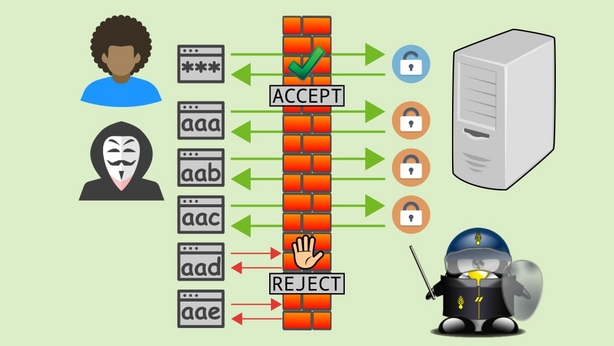
Security thread using of fail2ban

Fail2ban is a powerful tool that can be used to protect Linux servers from a variety of attacks. Here are some of the benefits of using Fail2ban:

  1. Improved security: Fail2ban can help to improve the security of your Linux server by blocking malicious IP addresses. This can help to protect your server from brute-force login attempts, denial-of-service (DoS) attacks, and port scans.
  2. Reduced load on your server: Fail2ban can help to reduce the load on your server by blocking malicious traffic. This can improve the performance of your server and make it less vulnerable to attack.
  3. Compliance: Fail2ban can help you to comply with a variety of security regulations, such as PCI DSS and HIPAA.
  4. Easy to use: Fail2ban is a relatively easy to use tool. It can be installed and configured with a few simple commands.
  5. Flexible: Fail2ban is a flexible tool. It can be configured to meet the specific needs of your server.

Insallation process

sudo apt-get install fail2ban
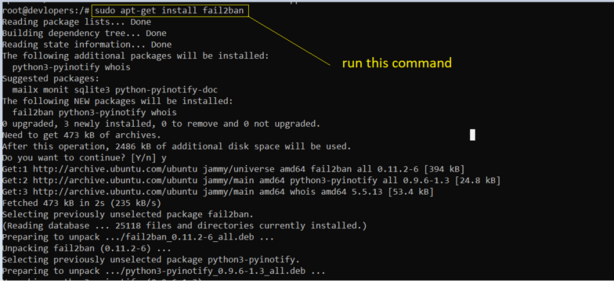
2nd step go to below path and add below code

cd /etc/fail2ban

[sshd]
enabled = true
port = ssh
filter = sshd
logpath = /var/log/auth.log
maxretry = 3
findtime = 300
bantime = 86400
ignoreip = 127.0.0.1
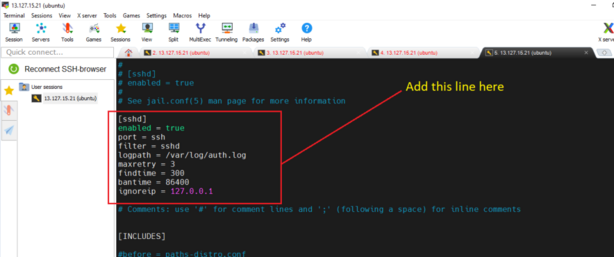
After adding save and exit.

Restart the server

sudo systemctl restart fail2ban
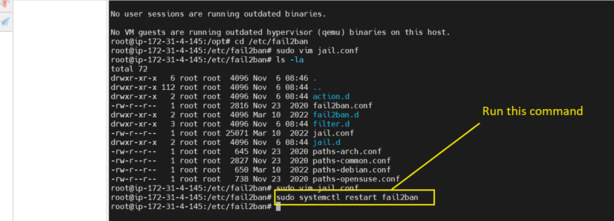
Once Fail2ban is enabled and running, it will start monitoring the SSH service for malicious activity. If Fail2ban detects malicious activity, it will ban the IP address that is responsible for the activity.

Thanks for learning 👍👍

Hi I am Amit Kumar Thakur Experienced as s Software Developer with a demonstrated history of working in the information technology and services industry. Skilled in HTML, CSS, Bootstrap4, PHP, Laravel-9 , REST API,FB API,Google API, Youtube Api, Bitbucket,Github,Linux and jQuery. Strong engineering professional focused in Computer/Information Technology Administration and Management. Currently my profile is to Software Developer, analyze the requirement, creating frame for web application, coding and maintenance.

Related Posts

Getting Started with Ansible Tutorial – Automate your Infrastructure

Ansible as a Strategic Automation Tool Ansible is now a cornerstone technology for teams that want predictable, auditable control over infrastructure and application delivery across on-premises and…

Ansible Training in Pune for Modern Automation Teams

Ansible is an essential automation platform for organizations that need consistent, repeatable, and auditable configuration and deployment across on-premises and cloud environments. In Pune’s rapidly evolving technology ecosystem,…

Ansible Training in Bangalore

Ansible has become a central automation platform for organizations that need consistent, traceable configuration and deployment across complex, mixed environments. In Bangalore’s technology ecosystem, where systems are large,…

Ansible: A Complete Guide from Basics to Advanced

Ansible has become a foundational automation platform for teams that must configure, deploy, and manage systems consistently across on-premises and cloud environments. The advanced Ansible course from DevOpsSchool is aimed…

TypeScript with NestJS: Engineering Enterprise-Grade Backend Systems

The Challenge of Sustainable Software Architecture The evolution of backend system development has reached an inflection point where ad-hoc solutions no longer suffice for enterprise requirements. Organizations…

TypeScript with NestJS for Modern DevOps: A Complete Guide

The Architectural Imperative for Modern Backend Systems Contemporary software engineering organizations confront a fundamental architectural dilemma: how to accelerate delivery velocity while maintaining system integrity and long-term…

0 0 votes
Article Rating
Subscribe
Notify of
guest
0 Comments
Oldest
Newest Most Voted
Inline Feedbacks
View all comments
0
Would love your thoughts, please comment.x
()
x