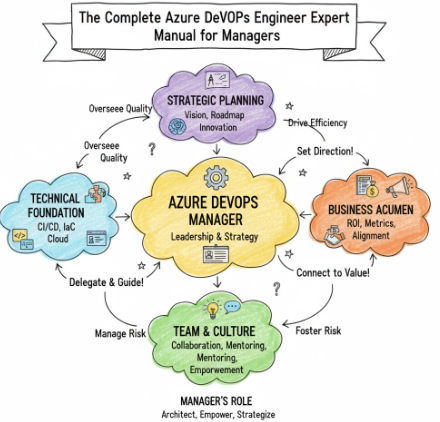
In my many years of working within the technical world, I have seen a clear shift in how we build and share software. It is no longer about individual developers working in a room by themselves. Today, the most successful companies are those that have built a bridge between creating code and running it. This bridge is where the Azure DevOps Engineer Expert (AZ-400) sits. This certification is a badge of honor for those who have mastered the art of delivering software that is fast, safe, and reliable.
This guide is for the engineers and managers who are ready to stop just “doing the work” and start “leading the work.” Whether you are in India or working with a team across the world, mastering Azure DevOps is about more than just a certificate; it is about learning how to manage the lifecycle of a product from the first thought to the final use. We will look at how this program works, the skills you will need, and how it can help you build a career that stands the test of time.
Master Certification Overview
To reach the level of an expert, you must understand the big picture. The AZ-400 is not an entry-level test; it is the final step in proving you are a leader in the field.
| Track | Level | Who it’s for | Prerequisites | Skills Covered | Recommended Order |
| DevOps | Expert | Working Engineers & Managers | AZ-104 or AZ-204 | CI/CD, IaC, Security, SRE, Monitoring | After Associate Level |
Azure DevOps Engineer Expert (AZ-400) Training
What it is
The Azure DevOps Engineer Expert (AZ-400) training is an advanced program that teaches you how to design a strategy for people, process, and tools. It focuses on using the Microsoft Azure cloud and GitHub to create a seamless flow of work. Instead of separate teams working in silos, this training teaches you how to build a unified system. You will learn to manage everything from the code in a repository to how the software performs on a server. It is the ultimate training for anyone who wants to architect the way a company ships software.
Who should take it
This program is designed for professionals who are already working in the field. If you are a software engineer who wants to take a step into leadership, or a manager who needs to understand how modern teams deliver work, this is for you. It is also perfect for system administrators who want to move away from manual work and toward automation. If you enjoy solving complex problems and want to be responsible for the high-level quality of an organization, this is your path.
Skills you’ll gain
By completing this training, you will build a set of skills that make you a leader in the engineering world. You will learn to move past simple tasks and start designing high-level strategies.
- Continuous Integration and Delivery: You will master the art of building automated pipelines that test and deploy code without any human help.
- Infrastructure as Code (IaC): Learn how to build and manage your cloud servers using code, which makes everything more reliable and easier to scale.
- DevSecOps Strategy: Understand how to build security into every step of your process, making sure your applications are safe from the very beginning.
- Instrumentation and Monitoring: Learn how to set up tools that watch your application and tell you if something is wrong before your users even see it.
- Site Reliability Engineering (SRE): Master the practices needed to keep massive systems running smoothly even when things go wrong.
Real-world projects you should be able to do
The true test of an expert is what they can build when the pressure is on. After this training, you will have the knowledge to lead major projects that provide real value.
- Designing a Global CI/CD Engine: You can build a system that allows a company to ship updates to multiple countries at once with zero downtime.
- Implementing Zero-Trust Security: Create a pipeline that automatically scans for security risks and blocks any code that doesn’t meet your safety standards.
- Self-Healing Infrastructure: Use monitoring and automation to build a cloud environment that can fix itself if a part of it stops working.
- Legacy Modernization: Lead a project to take a slow, manual team and turn them into a high-speed, automated unit that delivers updates every day.
Preparation plan
Getting ready for the AZ-400 requires a plan that respects your busy professional life. Depending on your experience, you can choose one of these paths:
- 7–14 Days (The Sprint): This is for those who already use Azure DevOps every day. Use this time to focus on the modules you don’t use often, such as security compliance or advanced monitoring. Practice with mock exams to get used to the question style.
- 30 Days (The Career Path): This is the best choice for most working engineers. Spend about 10-12 hours a week. Dedicate one week to each major area: Source Control, CI/CD, Infrastructure/Security, and Feedback. Ensure you do at least one hands-on project each week.
- 60 Days (The Deep Dive): If you are moving into a new role, take your time. Spend the first month mastering the basics of Azure administration. Use the second month to dive deep into the expert-level strategies and build several complex pipelines from scratch.
Common mistakes
I have seen many talented engineers struggle because they overlooked a few simple things. Avoiding these will make your journey much easier.
- Ignoring the “People” Part: DevOps is about how teams work together. Don’t skip the lessons on communication and team culture; they are as important as the code.
- Forgetting GitHub: GitHub is a huge part of the Microsoft ecosystem now. You must understand how GitHub Actions works as well as Azure Pipelines.
- Skipping the Practice Labs: You cannot learn automation just by reading. You must build things yourself to understand the small errors that happen in the real world.
- Overcomplicating the System: As an expert, your job is to make things simple. Avoid building complex automation when a simple script will do the job better.
Best Next Certification After This
Once you have mastered the AZ-400, your journey as an expert is just beginning. To stay ahead, you should look into specialized paths that complement your DevOps skills.
- DevSecOps Certified Professional (DSOCP): This is perfect if you want to become a leader in securing the modern software supply chain.
- SRE Certified Professional (SRECP): If you enjoy the technical challenge of keeping massive, global systems stable and fast.
- Master in DevOps Engineering (MDE): A high-level program designed for those who want to be recognized as global authorities in the field.
Choose Your Path: 6 Specialized Learning Tracks
The AZ-400 is a gateway. After you earn your expert status, you can choose a niche that fits your passion:
- DevOps Path: Focuses on the overall flow and culture of delivering high-quality software quickly and consistently.
- DevSecOps Path: For those who want to focus on making security a central, automated part of every script and process.
- SRE Path: Focuses on using software engineering to solve operation problems and maintain perfect system reliability.
- AIOps / MLOps Path: The future—learning how to automate the lifecycle of Artificial Intelligence and Machine Learning models.
- DataOps Path: Bringing the speed and discipline of DevOps to the complex world of big data and real-time analytics.
- FinOps Path: A vital role focused on managing the cost of the cloud and making sure every dollar spent provides real value.
Role → Recommended Certifications Mapping
Depending on what you do today or where you want to go, here is how you should plan your learning:
- DevOps Engineer: AZ-400 + Docker/Kubernetes Certification + Terraform.
- SRE: AZ-400 + SRE Certified Professional + Advanced Observability tools.
- Platform Engineer: AZ-400 + CKA + Cloud Networking and Security.
- Cloud Engineer: AZ-104 + AZ-400 + Cloud Architecture specialties.
- Security Engineer: AZ-400 + DevSecOps Certified Professional + Azure Security Engineer.
- Data Engineer: AZ-400 + DataOps Certified Professional + Azure Data Engineer.
- FinOps Practitioner: AZ-900 + AZ-400 + FinOps Certified Professional.
- Engineering Manager: AZ-400 + DevOps Leader Certification + Modern Management programs.
Next Certifications to Take
After you finish the AZ-400, it is a great idea to broaden your skills. Based on the latest industry insights from sources like GurukulGalaxy, here are three directions you can take:
- Same Track (Specialization): Get certified in Kubernetes (CKA). It is the perfect partner to Azure DevOps and is used by almost every major tech company.
- Cross-Track (Broadening Skills): Consider the AWS Certified DevOps Engineer – Professional. Mastering both major clouds makes you very rare and valuable in the job market.
- Leadership (Management): If you are moving into management, look into the Certified DevOps Leader (CDL) or PMP to help you lead the human side of technical change.
Why Choose DevOpsSchool?
Choosing where you train is just as important as the certificate you are trying to earn. You need a place that understands the real world of engineering.
- Practical Mentorship: Our mentors are experts who have spent years working in the industry. They teach you what works in a real job, not just what is in a book.
- Hands-On Learning: We focus on labs. You will spend your time building and fixing real systems, so you have the confidence to do the job well.
- Updated Content: The tech world changes fast. We make sure our training is always up to date with the latest tools from Azure and GitHub.
- Career Growth Support: We don’t just teach you the code; we help you understand how to use these skills to get better roles and higher leadership positions in the global market.
Top Training Institutions for Azure DevOps (AZ-400)
When you are ready to invest in your future, these institutions provide the most comprehensive and high-quality training available today:
- DevOpsSchool: A global leader in DevOps education, known for its deep focus on real-world projects and expert mentorship. This is the premier choice for those who want to be practitioners, not just certificate holders.
- Cotocus: Excellent for professionals who need a mix of technical workshops and strategic consulting to improve their career trajectory.
- Scmgalaxy: A massive resource for the engineering community, providing structured training paths and a huge wealth of information on all things “Ops.”
- BestDevOps: Focuses on simplified, career-oriented training that helps engineers quickly transition into high-paying DevOps roles.
- DevSecOpsSchool: The authority on bringing security into the automation lifecycle. This is the place to go if you want to specialize in safety and compliance.
- SRESchool: Dedicated entirely to the science of Site Reliability Engineering, helping you build systems that the world can rely on 24/7.
- AIOpsSchool: Helping engineers prepare for the next generation of operations driven by AI and Machine Learning automation.
- DataOpsSchool: A specialized center for bringing the speed and reliability of DevOps to the world of big data.
- FinOpsSchool: The leading institution for learning how to manage the cost and financial health of your cloud environment.
FAQs on Azure DevOps Engineer Expert (AZ-400) Training
1. Is the AZ-400 exam hard for a working professional?
It is an expert-level exam, which means it moves away from “what is this tool” and asks “how would you solve this business problem.” It is challenging, but with dedicated study and lab work, it is very achievable.
2. How much time should I spend on labs each week?
I recommend spending at least 50% of your study time in the lab. If you study for 10 hours a week, 5 should be spent building and testing pipelines in the Azure portal.
3. Do I need to be a programmer to pass?
You don’t need to be a senior software developer, but you must be comfortable with code and scripts. You will use YAML for pipelines and PowerShell or Bash for automation regularly.
4. What are the mandatory prerequisites?
To earn the expert title, you must first pass either the AZ-104 (Administrator) or AZ-204 (Developer) exam. You can take the exam anytime, but the title is only granted after the prerequisite is met.
5. Can I take the exam online?
Yes, Microsoft offers online proctored exams that you can take from your home or office.
6. Is this certification recognized internationally?
Yes. Microsoft certifications are a global standard and are respected by employers in every major tech hub in the world.
7. How do I keep my certification active?
Microsoft certifications are valid for one year. You can renew them for free every year by taking a simple online assessment on the Microsoft Learn website.
8. Can a manager benefit from this technical training?
Absolutely. It gives managers the technical depth needed to make better decisions, hire the right talent, and lead digital transformation projects effectively.
9. What are the key tools covered in the training?
You will master Azure DevOps Services (Boards, Repos, Pipelines, etc.), GitHub, Docker, Kubernetes, and IaC tools like Terraform.
10. Is the “Master in Azure DevOps” different from the AZ-400?
The AZ-400 is the official Microsoft exam. A “Master” program usually includes the AZ-400 as a base but adds much more real-world project work and advanced management training.
11. What is the best sequence for a software engineer?
The most effective path is: AZ-900 (Fundamentals) -> AZ-204 (Developer) -> AZ-400 (DevOps Expert).
12. Does the training cover both GitHub and Azure Pipelines?
Yes, both are core parts of the modern curriculum. You must know how to build and manage delivery pipelines in both environments.
FAQs (Specific to AZ-400 Success)
1. How much focus is on security in the AZ-400?
Security is a major pillar. You must know how to automate security checks and manage secrets safely in your pipelines.
2. Is GitHub required for the AZ-400?
Yes, GitHub is now a core part of the syllabus. You should be equally comfortable with both Azure Pipelines and GitHub Actions.
3. What is the pass mark for the exam?
The passing score is 700. The questions include multiple-choice, case studies, and sometimes real-world labs.
4. How often is the exam updated?
Microsoft updates the content every few months to keep up with new features in the cloud, so using fresh training materials is vital.
5. Why is “Compliance” included in the training?
For large companies, automation must follow strict legal and safety rules. The training teaches you how to automate these checks.
6. What is the biggest benefit of being certified?
Beyond a higher salary, it gives you the technical authority to lead major projects and make important decisions.
7. Can I pass by only reading the documentation?
It is very hard. The exam tests practical application, which you can only really learn through hands-on labs and real projects.
8. How does this compare to AWS DevOps?
They are similar in theory, but the tools are different. AZ-400 is for the Microsoft cloud, which is used by many of the world’s largest businesses.
Conclusion
Deciding to pursue the Azure DevOps Engineer Expert certification is a significant statement about your professional standards. It shows that you are not content with just doing the job—you want to master the systems that make modern engineering possible. In my years of seeing teams succeed and fail, I have found that those who bridge the gap between technical skill and business value are always the ones who lead. This training gives you exactly that—the ability to design systems that are fast, secure, and reliable. It is a challenging path, but the rewards—in terms of career growth, leadership opportunities, and professional respect—are well worth the effort. Now is the time to start, to learn, and to lead the future of engineering.
