1. Introduction: Two Perspectives on Europe’s Shifting Mobility Scene
Getting around Europe is undergoing a quiet shift. Whether navigating tight urban corridors, winding along coastal highways, or tackling alpine passes, people are rethinking how they access temporary transport. Year-round vehicle ownership no longer makes sense for everyone, especially with steep parking costs, urban congestion, and changing travel habits. Meanwhile, countless vehicle owners and independent rental shops find themselves with motorcycles, cars, scooters, and bicycles sitting idle for weeks or months at a time.
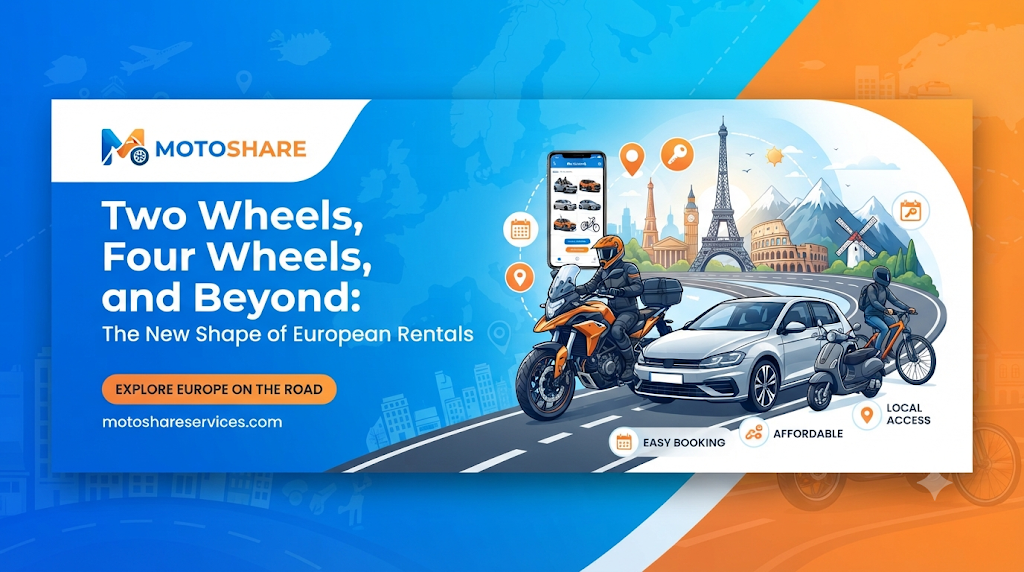
This creates a dual need across the modern travel and transport economy. On one side, riders and tourists want flexible, on-demand mobility without the financial anchor of ownership. On the other side, vehicle owners and boutique businesses need efficient ways to list their assets, manage incoming bookings, and handle daily administrative work. Digital marketplaces have stepped in to connect these two sides. Platforms like MotoShare operate within this space as a Europe-focused vehicle rental marketplace, linking private owners and professional operators with individuals looking for reliable temporary transport.
2. The Rider’s Perspective: Finding the Right Vehicle for a European Journey
Choosing temporary transport for a European trip requires looking past initial visual appeal or low daily rates. The ideal vehicle depends entirely on the nature of the journey ahead. A traveler planning an extended road trip across remote mountain roads has entirely different needs than a commuter navigating narrow city streets or a family looking for a comfortable car for a holiday getaway.
Consider a few common travel scenarios:
- Motorcycle trips between destinations: Best for solo riders or couples chasing scenic routes, requiring solid luggage capacity, long-distance comfort, and an engine tailored to highway or rural speeds.
- Scooter use for local city travel: Perfect for navigating historic urban cores where parking is scarce and traffic makes cars impractical.
- Bike rentals for short recreational journeys: Suited for coastal paths, park exploration, or leisurely day trips where slowing down is the primary goal.
- Car rentals for family trips and longer journeys: Necessary when traveling with multiple passengers, children, or heavy luggage across varying weather conditions.
- Temporary transportation for business or personal needs: Fills the gap when a personal vehicle is out of commission due to travel, maintenance, or relocation.
Successful vehicle selection always balances destination geography, total travel distance, luggage volume, passenger needs, the driver’s licensed experience, and the overall rental duration.
3. Understanding Motorcycle Rental Europe: What Travelers Should Know
For motorcycle enthusiasts, exploring the continent on two wheels offers an unmatched sense of freedom. Rather than dealing with the logistical hurdles and high expense of shipping a personal motorcycle across international borders, many riders prefer utilizing a motorcycle rental Europe service to secure a machine locally upon arrival.
However, planning a motorcycle journey abroad involves several practical considerations:
- Vehicle category and engine capacity: Selecting a machine that matches local road conditions and rider comfort, from nimble middleweights to heavy touring bikes.
- Driving licence and eligibility requirements: Ensuring local permits comply with European classifications and provider age restrictions.
- Rental duration and mileage conditions: Checking whether daily caps apply or if unlimited mileage options fit cross-border itineraries.
- Safety equipment and protective gear: Verifying whether helmets, jackets, and gloves are included or need to be sourced separately.
- Insurance and damage responsibilities: Understanding collision damage waivers, deductibles, and security deposits before setting off.
- Collection and return arrangements: Coordinating precise handover locations, key pickups, and out-of-hours drop-off protocols.
- Local traffic and road regulations: Researching country-specific rules regarding vignettes, safety kits, lighting, and speed limits.
Sorting these details out beforehand helps riders avoid unexpected hiccups and keeps the focus entirely on the road.
4. Beyond Traditional Rental Companies: How Peer-to-Peer Motorcycle Sharing Works
Traditional rental agencies rely on massive, centralized corporate fleets. In contrast, peer-to-peer sharing changes the dynamic by letting independent motorcycle owners make their own well-maintained machines available to verified renters when the bikes would otherwise sit unused.
In this setup, private owners create detailed listings featuring honest descriptions, clear photographs, and straightforward rental terms. When travelers browse the platform, they review these options, send booking requests, and communicate directly with owners about specifics. Once booked, both parties coordinate a physical inspection and handover.
A successful peer-to-peer exchange relies on a few key steps:
- Accurate vehicle descriptions: Detailing exact model years, modifications, and mechanical standing.
- Genuine photographs: Showing the bike’s actual cosmetic condition to avoid surprises.
- Transparent rental terms: Outlining fuel rules, cleaning expectations, and permitted travel zones.
- Owner-renter communication: Discussing itineraries and answering technical questions before meeting up.
- Booking confirmation: Securing the reservation through the platform’s digital workflow.
- Vehicle inspection and handover: Jointly checking the bike for existing wear before signing off.
- Insurance and protection arrangements: Leveraging platform-backed coverage to keep both parties protected.
Peer-to-peer arrangements differ from standard commercial fleets by offering a personal touch, giving renters access to unique, cared-for bikes while helping owners offset the fixed costs of ownership.
5. What Does a Motorcycle Rental Really Cost in Europe?
Budgeting for a trip involving a motorcycle rental cost Europe means looking at the full financial picture rather than just the base daily rate. Pricing structures vary significantly across the continent based on several factors.
Key influences on rental pricing include:
- Vehicle type and engine capacity: Smaller scooters and commuter bikes naturally cost less than high-end touring or adventure bikes packed with luggage cases and tech.
- Rental season and destination: Peak summer months in high-demand alpine or coastal hotspots usually drive up prices compared to shoulder seasons or quiet cities.
- Daily versus weekly rental periods: Many providers and private owners offer lower daily rates for extended multi-week bookings.
- Security deposits: Refundable holds placed on a card to cover potential minor scrapes or traffic fines.
- Insurance and protection options: Upgraded tiers that lower financial liability if an incident occurs.
- Mileage allowances: Standard daily limits versus packages built for long-distance touring without extra per-kilometer charges.
- Accessories and additional services: Costs for adding GPS units, top cases, riding gear, or extra authorized riders.
- Pickup and delivery arrangements: Fees for dropping off or collecting a bike outside standard depots.
Because rates bounce around based on country, provider type, and seasonal demand, it pays to compare actual listings and review the total fee breakdown before confirming.
6. The Business Behind Every Booking: Why Rental Operators Need Better Management
While riders focus on the open road, independent rental operators deal with a demanding day-to-day reality. Whether running a small motorcycle shop, a beachside scooter stand, a bike-touring outfit, or a local car rental agency, proprietors juggle plenty of moving parts to stay profitable.
Common operational headaches include:
- Managing several vehicles and rental periods: Keeping track of multiple assets across overlapping calendars.
- Avoiding booking conflicts: Stopping double-bookings or scheduling slips that leave customers stranded.
- Tracking vehicle availability: Knowing instantly which units are out on the road, in the shop, or ready to rent.
- Maintaining customer information: Keeping organized, secure records of client identities, licences, and contact details.
- Monitoring payments and revenue: Reconciling deposits, rental fees, and outstanding balances.
- Recording maintenance activities: Scheduling routine servicing, tire changes, and safety checks to keep the fleet reliable.
- Coordinating customer communication: Handling inquiries, handover instructions, and follow-ups efficiently.
As an operation scales past a handful of vehicles, manual spreadsheets and paper notebooks quickly break down, making digital management software essential.
7. Can Free Vehicle Rental Management Software Support Small Businesses?
For independent operators running on tight margins, expensive enterprise software can be a massive roadblock. To bridge this gap, more accessible tools have entered the market to help streamline workflows without breaking the bank. Businesses exploring free vehicle rental management software typically look for core digital capabilities to modernize operations.
Typical features found in these tools include:
- Vehicle and fleet records: Centralized databases tracking specs, plates, and the status of every asset.
- Reservation administration: Digital booking creation, changes, and cancellations.
- Availability calendars: Visual schedules displaying fleet utilization at a glance.
- Customer information management: Secure storage for renter profiles and verification documents.
- Payment tracking: Logging transaction states, security deposits, and refunds.
- Revenue records: Basic financial reporting to monitor business growth.
- Operational reports: Summaries of fleet usage, maintenance schedules, and upcoming handovers.
While these tools save time and boost organization, operators should keep limitations in mind. Free tiers often feature restrictions, vehicle listing caps, limited support, or prompts to upgrade for advanced features. Business owners should always double-check what is included before committing their workflow. Platforms like MotoShare offer advertised free vehicle rental management software capabilities to support participating providers, though exact features and plan limits should be reviewed against specific business needs.
8. One Rental Operation, Different Tools: Cars, Bikes, and Scooters
Not all rental businesses operate the same way. The specific vehicle fleet dictates unique administrative demands, requiring specialized software tools across different categories.
Car Rental Operations
Managing cars involves heavy documentation and legal compliance. Operators utilize free car rental software tools to maintain detailed client records, verify driver’s licences, track mileage logs, manage multi-day booking schedules, and store signed rental agreements securely.
Bike Rental Businesses
Bicycle rentals revolve around high volume, short durations, and constant turnover, especially in tourist-heavy towns. Effective bike rental software helps operators track diverse models (like city bikes, e-bikes, and road bikes), manage frame sizes, monitor equipment condition, and speed up check-outs and returns.
Scooter Rental Services
Scooter rentals require agility. Because bookings are short and turnover is rapid, scooter rental software focuses heavily on real-time availability tracking, fast reservation creation, quick ID verification, and close coordination with maintenance crews for regular check-ups.
Ultimately, software needs shift depending on fleet size, business models, and local rental workflows.
9. The Booking System Behind a Smooth Rental Experience
A well-designed vehicle rental booking system acts as the digital bridge connecting customer discovery with daily operations. When the booking journey is seamless and transparent, both renters and providers enjoy less friction.
A smooth rental process typically follows these stages:
- Searching for a vehicle by location and dates: Letting users filter inventory based on their timeline and destination.
- Reviewing available listings: Examining vehicle specs, photos, and reviews.
- Checking vehicle details and rental conditions: Reading up on mileage caps, fuel policies, and insurance deductibles.
- Requesting or confirming a reservation: Submitting trip details and locking in confirmation.
- Coordinating payment and collection: Handling secure transactions and arranging handover logistics.
- Managing the rental period: Keeping open communication lines during the hire.
- Completing the return process: Finalizing the vehicle check, closing the rental, and settling balances.
Marketplace discovery platforms and business management software work together to help customers find rides while giving operators the tools to manage those bookings seamlessly.
10. From Vehicle Owner to Rental Partner: Creating a New Opportunity
For private owners whose cars or motorcycles sit parked in a driveway most of the week, turning an idle asset into extra income is an appealing option. Participating in a shared economy platform lets owners earn money while helping fellow travelers explore.
For motorcycle owners, the process involves a few thoughtful steps:
- Assessing vehicle suitability: Ensuring the bike is mechanically sound, well-maintained, and appealing to renters.
- Checking legal and insurance requirements: Reviewing local laws and platform coverage policies.
- Preparing maintenance records: Gathering service logs to show the bike has been looked after.
- Creating a detailed listing: Writing honest descriptions and snapping clear photos.
- Setting rental availability: Blocking out personal use dates to keep the calendar straight.
- Communicating with potential renters: Answering questions promptly and vetting prospective riders.
- Organizing handovers and returns: Setting up a convenient meeting spot for inspections and keys. Owners can easily rent out my motorcycle using dedicated platform tools.
Similarly, car owners can explore listing their vehicles for rental when not in use. This involves checking vehicle registration, ensuring compliance with local inspection laws, prepping the interior and exterior, and organizing handover details. Car owners can list my car for rent on matching platforms to connect with drivers looking for flexible transport.
Earnings depend heavily on local demand, vehicle desirability, and seasonal trends—not every vehicle is continuously booked or immediately eligible.
11. What Makes a European Rental Marketplace Worth Considering?
Evaluating a vehicle rental platform requires looking at how well it serves both sides of the transaction. A dependable marketplace should offer clear advantages whether someone is looking to rent or looking to list.
For renters, key evaluation criteria include:
- Relevant local listings: Access to real inventory in the cities and regions they plan to visit.
- Clear vehicle information: Transparent details on make, model, year, and equipment.
- Transparent rental conditions: No hidden fees, clear insurance terms, and upfront pricing.
- Realistic availability: Calendars that accurately show when a vehicle is free.
- Booking communication: Responsive messaging tools to coordinate with providers.
- Insurance and payment clarity: Secure transactions and straightforward coverage terms.
For vehicle owners and businesses, important considerations include:
- Listing visibility: Reaching an active audience of travelers and locals searching for transport.
- Booking administration: Intuitive tools to accept, decline, or manage reservations efficiently.
- Fleet organization: Clean dashboards to track multiple vehicles and schedules.
- Customer management: Access to verified renter profiles and communication history.
- Operational convenience: Tools that cut down administrative overhead and simplify daily tasks.
- Clear marketplace terms: Fair commissions, transparent payouts, and reliable support.
A worthwhile platform proves its value through genuine usability, reliable data, and a focus on its community’s needs rather than just promotional hype.
12. The Challenges of Expanding a Vehicle Rental Marketplace Across Europe
Operating or using a vehicle rental marketplace across Europe means navigating a complex web of logistics and regulations. Unlike a single domestic market with uniform rules, the continent presents varied challenges:
- Country-specific rental regulations: Differing national and municipal laws governing commercial rentals and private sharing.
- Driving licence differences: Managing international equivalencies and age limits across various vehicle classes.
- Insurance requirements: Adhering to strict local underwriting rules, minimum coverage mandates, and cross-border travel limits.
- Currency and payment arrangements: Handling multiple currencies, transaction fees, and local payment preferences.
- Language and customer communication: Providing support and interfaces in multiple languages for international travelers.
- Seasonal demand: Adapting to extreme swings between busy summer tourism peaks and slow winter months.
- Vehicle maintenance: Ensuring listed vehicles meet local safety standards and inspection laws.
- Local inventory availability: Building a dense network of providers so users can find rides wherever they go.
Overcoming these hurdles requires accurate location-based listings, verified provider details, and a scalable platform architecture.
13. Where Vehicle Sharing and Rental Technology May Go Next
As the European mobility sector continues to grow, several trends are shaping the future of sharing and management. Digital booking systems are speeding up, while fleet management software grows smarter with automated maintenance reminders and digital check-ins.
Local discovery tools are also improving, helping travelers find niche vehicles—like vintage motorcycles, touring bikes, or electric scooters—closer to their points of arrival. The rise of electric mobility is bringing new vehicle categories into both commercial fleets and sharing networks, pushing software platforms to adapt.
At the same time, owner participation is expanding as more people look to offset ownership costs through occasional sharing. However, technology remains a tool rather than a replacement for fundamentals. No software platform replaces proper maintenance, legal compliance, comprehensive insurance, and good customer service. The future belongs to solutions that blend smart digital tools with reliable real-world execution.
14. Conclusion: Connecting European Riders With Smarter Rental Operations
The modern European rental market thrives at the intersection of flexibility and organization. For travelers, riders, and commuters, the ability to discover and secure temporary transport transforms how journeys are planned. For independent owners and small shop operators, access to structured marketplaces and management technology provides the operational backbone needed to run efficient rental activities.
By bridging these two perspectives, digital platforms create a balanced ecosystem where finding a vehicle is straightforward and managing a fleet is manageable. Whether planning a weekend motorcycle tour, grabbing a city scooter for errands, or running a growing rental shop, technology continues to streamline the ride. Platforms like MotoShare illustrate this approach by combining vehicle rental discovery, peer-to-peer connections, and advertised rental-management capabilities into a single ecosystem built for Europe’s diverse community of riders and operators.
