Introduction
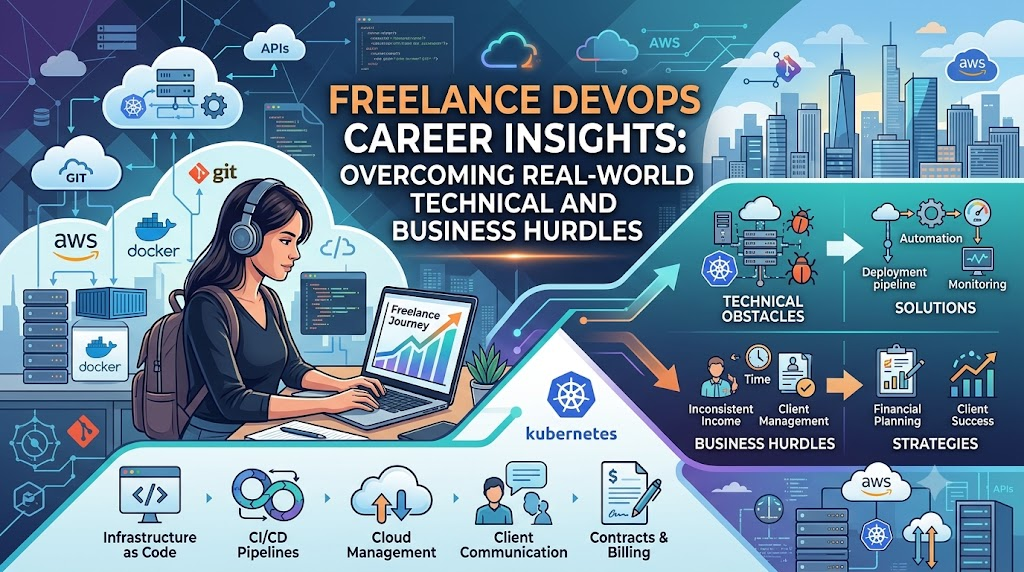
The demand for cloud-native architectures, automated delivery pipelines, and resilient infrastructure systems has driven an increasing number of software and systems engineers to transition from traditional corporate roles into independent consulting and freelancing. However, stepping away from an enterprise environment—where specialized teams handle project management, cloud budgets, access policies, and client relations—means taking full personal responsibility for end-to-end technical execution alongside critical business operations like contract acquisition, pricing, communication, and security. Understanding these operational hurdles upfront is essential for professionals seeking to build a sustainable, long-term consulting practice, and engaging with structured learning platforms like DevOpsSchool can help engineers develop both the technical mastery and strategic mindset needed to navigate this transition successfully.
What Is a DevOps Freelancer?
A DevOps freelancer is an independent technology practitioner who provides automation, cloud infrastructure design, continuous integration, continuous delivery (CI/CD), and operational engineering services to business clients on a contract, project, or hourly basis. Unlike permanent full-time employees, freelance professionals operate as independent entities, taking on direct responsibility for their business administration, tax filings, tool licensing, project pipelines, and ongoing skill enhancement.
While an employed engineer typically works within the predefined boundaries of a single enterprise infrastructure, an independent consultant engages with diverse tech stacks, varied delivery methodologies, and distinct team cultures across multiple client organizations.
+-----------------------------------------------------------------------+
|                    EMPLOYED VS. FREELANCE DEVOPS                      |
+-----------------------------------------------------------------------+
|  EMPLOYED DEVOPS ENGINEER             FREELANCE DEVOPS ENGINEER       |
|  ------------------------             --------------------------      |
|  • Single organization focus          • Multiple client environments  |
|  • Pre-defined scope & tools          • Adaptable tech stack & scope  |
|  • Fixed monthly compensation         • Variable contract-based revenue|
|  • Internal support teams             • Self-managed business tasks   |
|  • Guided career trajectory           • Self-directed learning path   |
+-----------------------------------------------------------------------+
Independent professionals are typically hired to solve specific operational challenges, accelerate digital transformations, or bridge temporary skills gaps within an organization’s existing internal engineering teams.
Common Freelance DevOps Responsibilities
- CI/CD Pipeline Design and Implementation: Designing, building, and optimizing automated pipelines using tools such as Jenkins, GitHub Actions, GitLab CI, or Azure DevOps to ensure reliable software delivery.
- Cloud Infrastructure Provisioning: Authoring clean, maintainable Infrastructure as Code (IaC) using Terraform, OpenTofu, or AWS CloudFormation to provision environments across public and private clouds.
- Containerization and Orchestration: Containerizing legacy and modern applications with Docker and deploying, managing, and scaling them using Kubernetes clusters.
- Observability and Monitoring Configuration: Deploying centralized logging, metrics collection, and alerting stacks using tools like Prometheus, Grafana, and the ELK/OpenSearch stack.
- Configuration Management and Automation: Writing Ansible playbooks or Chef/Puppet manifests to maintain system configurations across distributed node networks reliably.
Why Many Engineers Choose DevOps Freelancing
The movement toward independent DevOps work is driven by both technical and professional motivations. Engineers who step away from traditional corporate roles often seek broader technical exposure, greater operational autonomy, and direct control over their professional growth.
Flexibility and Geographical Freedom
Freelancing allows engineers to define their schedules and choose their working environments. Whether working remotely for global startups or assisting local enterprises, independent specialists control their daily operations, provided they meet agreed project milestones and client expectations.
Diverse Technical Exposure
Working within a single enterprise can sometimes lead to technical stagnation, as engineers may manage the same legacy systems for years. Independent contractors engage with multiple organizations, each running different cloud providers, deployment architectures, toolchains, and operational workflows. This constant variation accelerates technical maturity and broadens practical expertise.
Direct Financial Control and Career Scalability
In a traditional salaried job, financial growth is usually bound to annual performance reviews and fixed pay bands. Independent consultants set their own pricing models, billable rates, and project scopes. As technical expertise and market reputation grow, engineers can command higher fees, select higher-impact assignments, or expand into full-scale technical consultancies.
Top DevOps Freelancer Challenges (And How to Overcome Them)
Transitioning to an independent practice brings operational hurdles that extend far beyond technical execution. Addressing these obstacles requires practical strategies, structured workflows, and disciplined routines.
+-----------------------------------------------------------------------+
|                    TOP DEVOPS FREELANCER CHALLENGES                   |
+-----------------------------------------------------------------------+
|  1. Project Consistency       6. Service Pricing                      |
|  2. Establishing Credibility  7. Production Incident Management       |
|  3. Rapid Tooling Evolution   8. Work-Life Balance                    |
|  4. Multi-Client Contexting  9. Security & Compliance                 |
|  5. Non-Technical Comm.      10. Personal Brand Building             |
+-----------------------------------------------------------------------+
Challenge 1: Finding Consistent DevOps Projects
One of the initial struggles for independent professionals is replacing the stability of a monthly paycheck with a continuous pipeline of project work. Marketplaces can be crowded with low-cost competition, making it difficult to secure high-value contracts consistently.
How to Overcome It
To build a sustainable client pipeline, shift away from competing on price in generic freelance marketplaces. Focus instead on specialized technical positioning and professional networking.
- Build a Practical Portfolio: Publish sanitized, non-proprietary Infrastructure as Code templates, Kubernetes configurations, and automated pipeline scripts on platforms like GitHub or GitLab.
- Leverage Professional Networks: Reconnect with former colleagues, tech leads, and managers. A significant portion of high-quality consulting work originates from trusted professional recommendations.
- Share Industry Knowledge: Write technical breakdowns detailing how you solved complex operational problems, such as reducing cloud expenditure, optimizing build times, or migrating legacy services to containers.
Challenge 2: Building Client Trust Without a Corporate Brand
Clients are often hesitant to grant root access, cloud console administrative privileges, and pipeline secrets to an independent individual without the security backing of an established vendor or consulting brand.
How to Overcome It
Trust is built through transparency, structured documentation, and verified proof of competence.
- Develop Detailed Case Studies: Write clear, outcome-focused case studies detailing past engagements. Focus on metrics: “Reduced deployment cycle times by 65% and lowered cloud infrastructure overhead by $4,000 monthly.”
- Gather Professional Testimonials: Request written feedback, LinkedIn recommendations, and video testimonials from technical directors, engineering managers, and project stakeholders upon project completion.
- Demonstrate Clear Engineering Standards: Present clients with standard working procedures, secure access protocols, and structured project plans prior to commencing work.
Challenge 3: Keeping Up With Rapidly Changing DevOps Technologies
The cloud-native landscape updates rapidly. New cloud services, open-source tools, Kubernetes ecosystem additions, and security compliance standards emerge continuously, making it easy to feel overwhelmed by technical drift.
How to Overcome It
Maintain continuous learning by integrating structured study habits into your weekly work schedule.
- Establish an Isolated Personal Lab: Maintain a dedicated sandbox account across major public clouds (AWS, GCP, or Azure) to test new tools, architectural patterns, and automation scripts safe from production risks.
- Adopt Goal-Oriented Skill Upgrades: Rather than attempting to learn every tool, focus on foundational technologies that yield broad industry utility, such as advanced Kubernetes management, Terraform module design, and automated security scanning.
- Engage with Technical Communities: Participate in open-source projects, cloud user groups, and specialized technical forums to stay informed about real-world tool adoption and deprecation trends.
Challenge 4: Managing Multiple Clients and Projects
Balancing multiple client engagements simultaneously requires strict organizational habits. Without proper systems, engineers risk context switching, missed project deadlines, and operational burnout.
How to Overcome It
Adopt formal project management frameworks and clean boundaries between client assignments.
- Implement Task Management Systems: Use tools like Jira, Trello, or Notion to manage deliverables, document requirements, and track issue backlogs separately for each client.
- Establish Clear Scope Boundaries: Define precise project parameters within written agreements. Document explicitly what falls within scope and what constitutes additional, billable work.
- Set Fixed Working Blocks: Allocate dedicated time blocks in your calendar for specific clients, avoiding rapid back-and-forth switching between projects throughout the day.
Challenge 5: Handling Client Communication
Bridging the gap between deeply technical operations and business-focused client expectations is a common hurdle. Clients frequently care about business continuity, costs, and project delivery dates rather than the intricate mechanics of a specific tool setup.
How to Overcome It
Translate complex technical activities into clear business outcomes and maintain predictable communication habits.
- Provide Scheduled Updates: Send brief, structured weekly status reports detailing completed milestones, active work, upcoming goals, and technical blockers.
- Use Clear, Non-Jargon Language: When presenting options to business leaders, focus on outcomes like operational reliability, cost efficiency, deployment safety, and recovery timelines rather than dense technical jargon.
- Document Technical Decisions: Maintain clear Architecture Decision Records (ADRs) to document why specific tools, cloud services, or structural approaches were chosen during the project.
Challenge 6: Pricing DevOps Freelance Services
Determining appropriate rates is a critical step in independent work. Setting rates too low can lead to overwork and undervalued expertise while setting rates too high without established market proof can deter potential clients.
Pricing Models Comparison
| Experience Level | Pricing Model | Primary Focus Area | Key Consideration |
| Junior / Entry Freelancer | Hourly Billing | Execution of predefined technical tasks | Focus on execution speed and basic tasks |
| Mid-Level Specialist | Hourly / Weekly Retainer | Pipeline creation, cloud setups, basic migrations | Estimate project durations accurately |
| Senior DevOps Consultant | Milestone / Value-Based | System architecture, cost control, platform design | Charge based on business impact and efficiency |
| Enterprise Cloud Architect | Fixed Project / Monthly Retainer | Full digital migrations, SRE strategies, security compliance | Account for scope variations and management costs |
Pricing Factors
- Technical Expertise: Specialized skills in niche areas command premium rates compared to general administration.
- Project Complexity: Mission-critical infrastructure overhauls carry higher operational risks and justify higher rates.
- Contract Duration: Short-term, high-urgency interventions should carry higher rates than long-term, stable retainers.
Challenge 7: Handling Production Responsibilities
Managing production infrastructure independently means handling system uptime, unexpected outages, and deployment failures without an enterprise internal team to offload emergency calls.
How to Overcome It
Incorporate robust Reliability Engineering (SRE) practices into every environment you manage.
- Implement Robust Observability: Deploy comprehensive monitoring, metric gathering, and centralized logging stacks to detect performance degradation before systems crash.
- Create Clear Emergency Playbooks: Write step-by-step incident response procedures, system rollback guides, and disaster recovery plans for client teams.
- Establish Reasonable Support Availability: Explicitly outline on-call hours, incident response times, and emergency support terms within your service contracts to prevent round-the-clock availability expectations.
Challenge 8: Maintaining Work-Life Balance
Without the clear boundary of an office day, independent professionals often find themselves working late hours, addressing weekend alerts, and struggling to separate work from personal life.
How to Overcome It
Build explicit structural boundaries into your daily operations and client agreements.
- Define Fixed Operational Hours: Inform clients of your formal availability windows for non-emergency inquiries and routine project communication.
- Schedule Regular Time Off: Plan non-working days into your calendar well in advance, giving clients sufficient notice to prepare for period of scheduled absence.
- Automate Routine System Tasks: Use automation scripts, automated health checks, and self-healing cloud configurations to minimize manual operational intervention during off-hours.
Challenge 9: Security and Compliance Responsibilities
Managing enterprise infrastructure, credentials, and deployment keys presents significant security risks. A single misconfigured access control list, exposed API key, or non-compliant cloud bucket can cause serious security incidents.
How to Overcome It
Integrate security practices into every phase of your operational workflows from day one.
- Enforce Least Privilege Access: Require dedicated, role-based credential accounts with multi-factor authentication (MFA) enabled for all environments, refusing the use of shared root accounts.
- Use Centralized Secret Management: Store environment secrets, API tokens, and access keys in secure systems like HashiCorp Vault, AWS Secrets Manager, or Azure Key Vault rather than hardcoding them into repos.
- Automate Security Scans: Integrate static code analysis, vulnerability scanning, and container security tools directly into CI/CD pipelines to catch vulnerabilities before code reaches production environments.
Challenge 10: Building a Strong Personal Brand
Standing out in a competitive global market requires an established, recognizable online presence that demonstrates expertise and reliability.
How to Overcome It
Consistent contribution to the broader engineering community is key to building a recognized personal brand.
- Publish Technical Content: Write clear, practical articles and guidebooks explaining solutions to non-trivial operational problems you have encountered and resolved.
- Maintain Open-Source Repositories: Share well-documented infrastructure blueprints, automation scripts, and utility modules on public repositories.
- Participate in Industry Events: Present technical case studies, cloud architectural patterns, or operational strategies at tech meetups, webinars, and industry conferences.
Technical Skills Every DevOps Freelancer Should Develop
To remain competitive and deliver high-value results, independent practitioners must master a balanced technical stack.
| Skill Area | Important Skills | Why It Matters |
| Linux & Systems | Shell scripting, system performance analysis, network routing, storage management | Forms the core operating foundation for cloud platforms and enterprise environments |
| Cloud Computing | AWS, Google Cloud, Microsoft Azure, IAM policies, VPC networking, serverless architectures | Essential for designing, scaling, and managing modern infrastructure systems |
| Infrastructure as Code | Terraform, OpenTofu, AWS CloudFormation, Pulumi, Ansible | Enables automated, reproducible, and easily auditable environment configurations |
| CI/CD Automation | GitHub Actions, GitLab CI, Jenkins, ArgoCD, Flux, Azure Pipelines | Automates software build, test, and deployment processes safely and efficiently |
| Containerization | Docker, Podman, Kubernetes, Helm, Container Security | Standardizes application deployment across varied development and production setups |
| Observability | Prometheus, Grafana, ELK/OpenSearch Stack, Datadog, OpenTelemetry | Provides continuous insights into system health, performance trends, and operational bottlenecks |
| DevSecOps | Vulnerability scanning, secret management, IAM hardening, compliance auditing | Secures cloud resources and ensures environments meet necessary industry standards |
Business Skills Every DevOps Freelancer Needs
Technical skills alone are insufficient for a successful independent career. Managing an independent consulting practice requires practical business acumen.
+-----------------------------------------------------------------------+
|                 ESSENTIAL FREELANCE BUSINESS SKILLS                   |
+-----------------------------------------------------------------------+
|  CLIENT MANAGEMENT   | Maintain expectations, progress reports & trust |
|  PROPOSAL WRITING    | Clear project scopes, deliverables & terms     |
|  NEGOTIATION         | Value-based pricing, rate defense & flexibility|
|  PROJECT PLANNING    | Realistic timelines, milestones & backlogs     |
|  DOCUMENTATION       | Operational guides, handovers & decision logs  |
+-----------------------------------------------------------------------+
Client Management
Managing relationships involves setting expectations clearly, handling scope changes constructively, and communicating proactively during project setbacks.
Proposal Writing and Contracting
Drafting clean, concise proposals is crucial. A strong project proposal clearly defines the core problem, proposed architectural solution, project milestones, precise deliverables, timeline estimates, and payment terms.
Scope Negotiation
When clients request updates or features beyond the initial contract, skilled consultants explain the impact on timelines and costs professionally, adjusting agreements through formal change requests rather than absorbing extra work for free.
Technical Documentation and Handovers
Creating clean, well-structured documentation ensures client teams can run, maintain, and scale delivered infrastructure smoothly after your contract ends. This professionalism frequently leads to repeat contracts and client referrals.
Tools Helpful for DevOps Freelancers
Utilizing the right suite of tools streamlines both engineering execution and client-facing business operations.
| Category | Tools | Purpose |
| Project Management | Jira, Trello, Notion, Asana | Organize task backlogs, manage project milestones, and track project status |
| Communication | Slack, Microsoft Teams, Zoom | Maintain daily team alignment and host client progress check-ins |
| Cloud Infrastructure | AWS, Google Cloud, Microsoft Azure | Host, provision, and scale client application workloads |
| Automation & IaC | Terraform, Ansible, GitHub Actions, GitLab CI | Automate infrastructure builds, deployments, and configuration tasks |
| Observability | Prometheus, Grafana, Datadog | Track system metrics, monitor availability, and route incident alerts |
| Documentation | Confluence, MkDocs, Notion, GitBook | Author system architecture guides, operational runbooks, and handover docs |
How to Start a DevOps Freelance Career Step-by-Step
Transitioning into independent consulting is most successful when executed as a structured, phased progression rather than an abrupt leap.
+-----------------------------------------------------------------------+
|                    FREELANCE CAREER ROADMAP                           |
+-----------------------------------------------------------------------+
|  STEP 1: Build Strong DevOps Fundamentals                             |
|    └─> Master Linux, Cloud Platforms, Networking, CI/CD, and IaC      |
|  STEP 2: Create Practical Sandbox Projects                            |
|    └─> Build production-grade clusters, automated pipelines & IaC    |
|  STEP 3: Assemble a Professional Portfolio                            |
|    └─> Document system design choices, repos, and architectural diagrams|
|  STEP 4: Secure Initial Client Projects                               |
|    └─> Engage personal network, consult, and build initial references |
|  STEP 5: Deliver Exceptional Technical Quality                        |
|    └─> Provide clear handovers, detailed docs & thorough communication |
|  STEP 6: Scale Into a Sustainable Practice                            |
|    └─> Transition to value pricing, retainers, and specialized work   |
+-----------------------------------------------------------------------+
Step 1: Build Strong DevOps Fundamentals
Master core operational disciplines before offering freelance services. Focus deeply on Linux, cloud architecture, networking basics, continuous delivery concepts, Infrastructure as Code, and containerization.
Step 2: Create Practical Sandbox Projects
Develop complete, production-grade applications in isolated personal labs. Build multi-stage CI/CD pipelines, provision Kubernetes clusters via Terraform, set up centralized monitoring stacks, and secure system access points.
Step 3: Assemble a Professional Portfolio
Document your lab projects clearly. Host sanitized code repositories on public Git accounts, author technical walk-throughs, and illustrate architectures using clean system diagrams to show potential clients how you approach technical challenges.
Step 4: Secure Initial Client Projects
Start by offering short-term technical audits, pipeline optimizations, or migration assessments through your professional network. Small initial projects help build client testimonials and refine your project estimation skills without excessive risk.
Step 5: Deliver Exceptional Technical Quality
Treat early assignments with extreme care. Maintain transparent communication, stick strictly to timelines, document everything thoroughly, and provide thorough team handovers to convert initial assignments into long-term retainer engagements.
Step 6: Scale Into a Sustainable Practice
As market demand for your services grows, refine your positioning. Move away from standard hourly execution and transition toward project-based, value-driven pricing models or recurring advisory retainers.
Real-World DevOps Freelancer Scenario
To understand how these concepts operate in practice, consider the real-world scenario of an engineer named Alex who transitioned from a corporate role into independent DevOps consulting.
+-----------------------------------------------------------------------+
|                     CASE STUDY: ALEX'S TRANSITION                     |
+-----------------------------------------------------------------------+
|  INITIAL STATE: Enterprise Systems Administrator with 5 years exp.    |
|  CHALLENGE: No direct client base, unproven freelance market presence |
|                                                                       |
|  ACTION TAKEN:                                                        |
|  1. Built public IaC blueprints for scalable cloud architectures      |
|  2. Published technical breakdowns on container migration             |
|  3. Secured initial $1,500 pipeline audit for a regional startup      |
|  4. Delivered detailed audit report + automated deployment scripts    |
|                                                                       |
|  RESULT: Client converted audit into a $5,000/month cloud retainer;   |
|          Referred two new enterprise clients within 6 months.         |
+-----------------------------------------------------------------------+
After five years as an enterprise systems administrator, Alex decided to pursue independent consulting. His primary challenge was establishing market trust without an agency brand behind him.
Instead of bidding on generic low-cost job boards, Alex focused on a specific challenge: helping early-stage startups modernize fragile, manual deployment processes. He published detailed technical breakdowns illustrating how automated pipelines prevent deployment downtime and lower cloud costs.
A regional software company reached out to Alex to audit their failing build setup. Alex defined a clear $1,500 fixed-scope audit package, delivering a comprehensive assessment report alongside automated prototype scripts that reduced deployment times from forty minutes to six.
Impressed by the business impact, clarity, and thorough documentation, the client hired Alex on a recurring $5,000 monthly retainer to oversee their cloud migration. Within six months, that successful engagement generated word-of-mouth referrals, allowing Alex to build a stable, high-value consulting practice.
Common Mistakes DevOps Freelancers Make
Avoiding frequent operational mistakes helps save time, protect professional reputation, and prevent unnecessary stress.
- Focusing Exclusively on Technical Execution: Neglecting business skills like clear communication, proposal writing, and relationship management limits long-term growth.
- Ignoring Clear Project Scope Definitions: Failing to define project boundaries early leads to unpaid extra work, missed timelines, and client friction.
- Underpricing Services to Win Projects: Competing solely on price lowers perceived expertise and makes delivering high-quality work unsustainable over time.
- Skipping Documentation and Handovers: Leaving client teams with undocumented configurations causes operational confusion and damages professional trust.
- Neglecting Security Best Practices: Using insecure credentials, neglecting encryption, or applying loose access policies puts client infrastructure at unnecessary risk.
- Failing to Maintain Continuous Learning Habits: Relying on aging technical skills eventually leads to obsolescence as cloud and automation technologies evolve.
How DevOpsSchool Helps Build DevOps Skills
Building a successful independent technology career requires a solid foundation in modern engineering principles, real-world tool application, and operational strategy. Hands-on learning programs designed around actual enterprise scenarios help accelerate this learning process significantly.
Educational platforms such as DevOpsSchool focus on delivering practical, industry-aligned training covering core cloud, containerization, automation, and continuous delivery tools. By participating in structured, project-driven learning, engineers gain real hands-on experience building, securing, and managing complex cloud-native systems.
This practical experience enables professionals to take on client projects confidently, design reliable infrastructure solutions, and overcome technical challenges efficiently throughout their independent consulting journey.
DevOps Freelancer Career Growth Roadmap
Independent consulting offers clear opportunities for long-term career progression as technical skills, business knowledge, and client networks mature.
+-----------------------------------------------------------------------+
|                    CAREER PROGRESSION MATURITY                        |
+-----------------------------------------------------------------------+
|                                                                       |
|  [STAGE 4] DEVOPS CONSULTING AGENCY OWNER                             |
|            • Manages teams, enterprise contracts & agency growth      |
|                                                                       |
|  [STAGE 3] SENIOR DEVOPS & CLOUD ARCHITECT CONSULTANT                 |
|            • High-value system design, security & retainer models    |
|                                                                       |
|  [STAGE 2] INTERMEDIATE DEVOPS FREELANCER                             |
|            • End-to-end migrations, container setups & IaC design    |
|                                                                       |
|  [STAGE 1] BEGINNER FREELANCER                                        |
|            • Task execution, basic automation & script updates       |
|                                                                       |
+-----------------------------------------------------------------------+
Stage 1: Beginner Freelancer
- Core Focus: Task execution, pipeline updates, basic scripting, cloud environment provisioning.
- Client Model: Subcontracting, small fixed-scope tasks, assisting lead engineers.
- Primary Objective: Build practical experience, complete projects successfully, and collect initial testimonials.
Stage 2: Intermediate DevOps Freelancer
- Core Focus: Complete CI/CD pipeline builds, containerization overhauls, Infrastructure as Code deployment, monitoring setups.
- Client Model: Direct client contracts, fixed-scope projects, short-term implementation engagements.
- Primary Objective: Establish a stable portfolio, refine pricing models, and secure repeat client business.
Stage 3: Senior DevOps & Cloud Architect Consultant
- Core Focus: Full cloud migrations, system architecture, site reliability engineering strategies, cost management, DevSecOps integration.
- Client Model: Strategic consulting, monthly advisory retainers, value-based pricing engagements.
- Primary Objective: Deliver high-impact strategic advisory work, optimize client spend, and maximize revenue per contract.
Stage 4: DevOps Consulting Business Owner
- Core Focus: Business development, team recruitment, client account growth, specialized agency services.
- Client Model: Enterprise-level service agreements, multi-engineer project contracts.
- Primary Objective: Transition from individual technical execution to running a scalable, multi-person consulting agency.
Benefits of Becoming a DevOps Freelancer
While independent consulting requires dedication and self-discipline, the long-term professional benefits make it an attractive career path for skilled engineers.
- Global Engagement Opportunities: Work directly with forward-thinking startups, mid-sized firms, and enterprise organizations across global technology markets.
- High Technical Autonomy: Freedom to select project architecture, choose suitable open-source tooling, and implement operational best practices.
- Accelerated Professional Growth: Exposure to diverse cloud setups, deployment workflows, and business environments speeds up career progression compared to static internal roles.
- Flexible Work Patterns: Autonomy to schedule working hours, define project volume, and work remotely from any location with reliable internet access.
- Uncapped Earning Potential: Direct connection between project value delivery, technical reputation, and overall business revenue.
Future of DevOps Freelancing
The demand for independent DevOps, cloud, and site reliability engineering specialists continues to expand as cloud environments grow increasingly complex.
+-----------------------------------------------------------------------+
|                      FUTURE INDUSTRY TRENDS                           |
+-----------------------------------------------------------------------+
|  • EXPANSION OF PLATFORM ENGINEERING & INTERNAL DEVELOPER PLATFORMS   |
|  • INTEGRATION OF AIOps & INTELLIGENT PIPELINE AUTOMATION            |
|  • ACCELERATED ADOPTION OF MULTI-CLOUD & HYBRID ENVIRONMENTS          |
|  • MANDATORY EMBEDDED DEVSECOPS & COMPLIANCE AUTOMATION               |
+-----------------------------------------------------------------------+
- Growth in Platform Engineering: Organizations are increasingly seeking specialists to build internal developer platforms (IDPs), self-service developer portals, and standardized deployment workflows.
- Expansion of DevSecOps Consulting: As cyber threats advance and data regulations tighten, clients require expert guidance to embed automated security controls directly into their delivery pipelines.
- Integration of AIOps and Smart Automation: Incorporating machine learning tools for predictive log analysis, automated incident response, and smart resource scaling will create new consulting opportunities.
- Multi-Cloud Complexity: Businesses seeking to avoid cloud vendor lock-in require skilled architects capable of designing and maintaining resilient, multi-cloud infrastructure environments.
Frequently Asked Questions
What are the biggest DevOps freelancer challenges?
The most common challenges include finding a steady stream of clients, establishing market trust without a brand name, keeping up with rapid tool updates, pricing services accurately, and managing production responsibilities across multiple accounts.
Is DevOps freelancing a viable long-term career option?
Yes. As companies continue moving to cloud infrastructure and automated delivery systems, demand for experienced independent engineers, cloud architects, and SRE consultants remains consistently high globally.
How can a beginner engineer start DevOps freelancing?
Start by mastering core technical foundations—Linux systems, networking, a public cloud platform, Git, Docker, and Terraform. Build real lab projects, publish your code on public repositories, document your work clearly, and start with small, well-defined projects.
What technical skills are essential for a DevOps freelancer?
Core requirements include strong Linux administration skills, proficiency in at least one major cloud provider (AWS, Azure, or GCP), Infrastructure as Code (Terraform), CI/CD pipelines (GitHub Actions, Jenkins), container orchestration (Kubernetes), and basic security practices.
How do freelance DevOps engineers find client projects?
Engineers find projects through professional networking, recommendations from former colleagues, sharing technical content on platforms like LinkedIn, contributing to open-source software, and engaging with niche tech communities.
How much practical experience is needed before starting freelancing?
While there is no strict rule, having at least two to three years of hands-on experience in software development, cloud infrastructure, or systems administration provides a strong base to deliver quality client work independently.
Should freelance DevOps engineers learn Kubernetes?
Yes. Container orchestration with Kubernetes has become a industry standard for enterprise application deployment. Knowing how to deploy, manage, scale, and secure Kubernetes clusters is a highly valuable skill for freelancers.
How can freelancers build client trust effectively?
Trust is built through technical transparency, clear written communication, detailed documentation, verified testimonials, clean code repositories, and reliable delivery against project milestones.
What pricing model works best for freelance DevOps work?
Beginners often start with hourly billing or fixed-scope projects. As expertise and market reputation increase, transitioning to weekly retainers, milestone pricing, or value-based consulting models is usually more sustainable.
How should a freelancer handle scope creep during a project?
Define explicit project deliverables, parameters, and non-goals in your initial contract. When additional client requests arise, address them professionally using formal change requests that adjust project timelines and budgets accordingly.
What business skills are necessary for independent tech consultants?
Key business skills include client relationship management, proposal drafting, contract negotiation, project milestone planning, clear technical writing, and basic invoice and tax management.
How do freelancers manage production incidents across clients?
By setting up robust observability tools, building automated recovery routines, creating emergency runbooks, and establishing realistic support availability windows clearly stated in client service contracts.
Is it better to specialize in a specific niche or remain a generalist?
Starting with a broad operational foundation helps you handle varied projects, but specializing over time—such as focusing on Kubernetes security, cloud cost optimization, or financial tech compliance—allows you to command higher consulting fees.
How can freelancers maintain work-life balance?
Set clear daily communication schedules, establish explicit support availability in contracts, automate routine maintenance tasks, use task management frameworks, and schedule planned time off in advance.
Can a freelance DevOps practice grow into a full agency?
Yes. Many successful consultants expand by hiring additional engineers, delegating project execution, taking on larger enterprise contracts, and transitioning their practice into a full-service DevOps consulting firm.
Final Thoughts
Building a successful independent career as a DevOps engineer requires a deliberate balance of technical expertise, disciplined business management, clear communication, and adaptable problem-solving. Transitioning away from traditional employment offers great autonomy and financial growth, but it requires actively taking responsibility for finding clients, managing operations, maintaining production reliability, and continuously updating your skills.
Overcoming these operational hurdles is not about learning every new tool that enters the ecosystem. Success comes from mastering core cloud-native fundamentals, establishing structured operational routines, building transparent client relationships, and delivering practical business value. With a methodical approach to learning, clear scope management, and a commitment to quality execution, independent engineers can build sustainable, rewarding, and long-term consulting practices.
