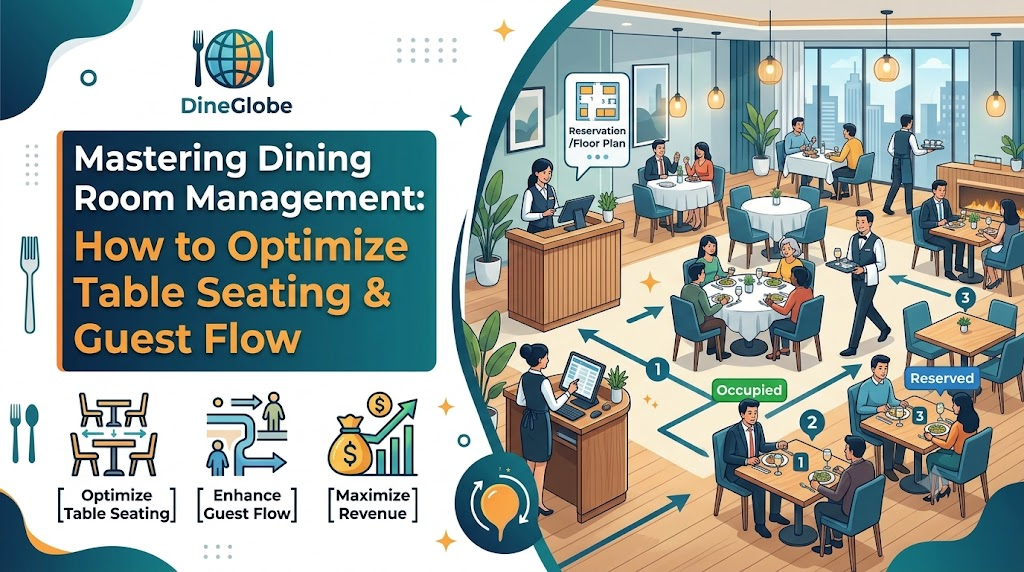
Walk into almost any busy neighborhood bistro or high-volume steakhouse on a Saturday night, and the signs of front-desk strain are obvious. The entry vestibule is packed three deep with restless walk-ins, the reservation ledger has three different colors of crossed-out ink, and a host is darting between dining rooms just to see if table 14 has paid their bill.
This operational bottleneck hits restaurants where it hurts most: guest retention and gross revenue. Maintaining smooth front-of-house restaurant operations is the linchpin of a profitable service. When platforms like DineGlobe step in to handle modern reservations, digital waitlists, and live table allocations, operators quickly realize how much smoother service runs when the host stand operates with complete visibility rather than guesswork.
Mastering your dining room’s rhythm requires examining where service stalls, fixing floor layout flaws, and using clear systems that keep both servers and guests at ease.
3 Hidden Friction Points Draining Your Dining Room Profits
Front-of-house inefficiencies don’t announce themselves loudly; they sneak up in fractions of minutes that compound across a dinner rush.
1. The Disconnected Host Station
When phone reservations, online booking logs, and walk-in clipboards live in separate silos, the greeting team spends more time shuffling papers than welcoming guests. A host distracted by administrative clutter takes longer to seat parties, leading to awkward entryway logjams and a poor first impression.
2. Phantom Capacity and Misallocated Tables
Consider a four-top booth occupied by a solo diner or a couple during prime dinner hours because the host couldn’t quickly pinpoint an open two-top. That single misstep cuts your seating efficiency for the next 90 minutes. Without an accurate, visual bird’s-eye view of table availability, valuable covers vanish into thin air.
3. Kitchen Avalanches Caused by Cluster Seating
When a host suddenly seats four four-top tables across adjacent stations within five minutes, two problems occur immediately:
- The assigned servers fall behind on greetings, drink orders, and water service.
- The kitchen receives a sudden wave of 16 covers all firing appetizers at the exact same moment.
The resulting service drag slows down the entire room, ballooning dining durations and stalling subsequent reservations.
Blueprint for an Efficient, High-Yield Floor
Running a calm, high-capacity dining room is an operational science. These tactical adjustments help venue managers reclaim control over their floor.
Incoming Reservation / Walk-In
         │
         ▼
Dynamic Table Allocation (Matched by Party Size)
         │
         ▼
Staggered Seating Pacing (Protects Kitchen Line)
         │
         ▼
Live Meal Status Tracking (Drinks ➔ Mains ➔ Cleared)
         │
         ▼
Rapid Reset & Turn
1. Rethink Physical Layouts and Traffic Lanes
A high-converting floor plan balances seat count with clear service pathways:
- Prioritize two-top flexibility: Two-tops are the most versatile building blocks in hospitality. Grouping pairs of two-tops allows staff to combine or split tables rapidly to match party sizes without reconfiguring an entire row.
- Protect service runways: Keep clear paths between the kitchen pass, the service bar, and bus stations. If food runners must squeeze past guest chairs, accident rates spike and ticket pacing slows.
- Decongest the entrance: Create an intentional waiting nook near the bar or lounge. Giving walk-in diners an inviting space to grab a beverage keeps the front doorway clear and creates an immediate incremental revenue stream.
2. Implement Smart, Data-Driven Waitlists
Telling a guest “it’ll be around 35 minutes” without data is an invitation for walkouts. Today’s guests expect precision and autonomy. A modern digital waitlist that sends automated text messages when tables are ready lets diners step outside or grab a drink nearby without fear of losing their spot. Furthermore, linking the waitlist to table status updates provides realistic quotes that build guest trust.
3. Shift from Third-Party Marketplaces to Direct Bookings
Third-party reservation portals are useful for discovery, but leaning on them as your sole booking engine erodes your bottom line via recurring per-seat fees. Building a robust engine for direct bookings keeps operational control and customer relationships under your own roof. You gather accurate guest notes, track repeat visits, and pocket 100% of the margins on every cover seated.
Upgrading Floor Management with DineGlobe
Fixing these service gaps doesn’t require overhauling your entire staff; it requires giving your front team tools built specifically for the reality of high-volume service.
This is where DineGlobe’s front-of-house management platform provides substantial operational value. By unifying reservations, interactive floor plans, digital waitlists, and arrival tracking into one intuitive ecosystem, the software removes the friction points that plague traditional host stands:
- Centralized Reservation Books: Eliminate double-bookings and split records with a clean booking engine designed to drive commission-free direct reservations.
- Interactive Floor Mapping: View live dining room states at a glance—identifying open, seated, check-dropped, and dirty tables in real time.
- Streamlined Waitlist Pacing: Manage walk-in queues digitally, update guests automatically via SMS, and optimize your seating allocations based on actual dining durations.
- Controlled Arrival Flow: Set pacing thresholds to prevent the host stand from overwhelming kitchen cook lines during peak arrival times.
Equipping your front-of-house crew with live operational clarity replaces frantic guessing with structured, confident hospitality.
How to Trim Turn Times Without Ever Rushing the Table
Boosting table turns is not about dropping checks before dessert menus are offered; it is about eliminating unproductive delays between meal milestones.
| Dining Stage | Where Time Is Wasted | How to Fix It |
| Seating | Table is vacant, but host doesn’t know it’s clean | Bussers flag table clean status on a shared digital floor map |
| Appetizer Order | Server trapped running food to another section | Dedicated runner support ensures orders are taken within 3 minutes |
| Bill Settlement | Guests wait 10+ minutes for card processing | Server drops check proactively once plates are cleared, or offers mobile pay |
| Table Turnover | Dirty dishes linger after party departs | Busser assigned immediate reset alerts within 90 seconds of departure |
Shaving just two minutes off each of these steps trims eight minutes per turn. Across three turns a night, you regain nearly half an hour of operational capacity—often unlocking an entire extra round of seatings on peak evenings.
The Path to Smarter Shifts
A well-orchestrated dining room sets the tone for everything else in a restaurant. When hosts seat tables systematically, servers can give every party attentive care, kitchen teams can cook with steady precision, and guests leave feeling valued rather than rushed.
Evaluate your entry bottlenecks, audit your physical table spacing, and bring your front desk onto a modern workflow. If you want to streamline direct reservations, organize your floor plan, and maintain tight control over your waitlists, explore how DineGlobe can elevate your service operations today.
Frequently Asked Questions
What constitutes front-of-house restaurant operations?
Front-of-house operations cover all guest-facing touchpoints in a restaurant. This includes your online reservation channels, host greeting, waitlist management, dining room seating arrangements, table service, and checkout procedures.
How does a digital floor plan boost restaurant revenue?
A digital floor plan gives your team real-time visibility into table turnover and seating status. By tracking dining phases (appetizers, entrées, paid checks), hosts can seat arriving guests immediately when a table clears, minimizing empty table gaps during peak revenue hours.
Why are direct bookings preferable to third-party reservation apps?
Third-party platforms charge recurring fees or commissions per diner, which quickly cuts into narrow restaurant margins. Direct bookings through your own website allow you to capture guest data directly, eliminate per-seat commissions, and maintain complete control over booking policies.
What is the best way to handle walk-in crowds during peak rush hours?
The most reliable method is using an automated digital waitlist. Instead of forcing guests to wait in an overcrowded entryway, the system texts them real-time updates on their table status, giving them freedom to grab a drink nearby while dramatically lowering walkout rates.
How do floor managers prevent the host stand from flooding the kitchen?
By implementing reservation pacing rules. Setting a maximum cover cap per 15-minute seating block ensures that guests are seated in structured intervals, giving line cooks and servers time to pace service effectively.
